Certified arborist inspecting tree branches for storm damage risk in Barrie, Ontario
Wondering how to protect trees from spring storms in Barrie and Simcoe County? This guide covers what to check after winter, which branches to flag, and when to call a certified arborist.
Key Takeaways
A little preparation before spring weather arrives can help you spot tree hazards and make informed care decisions. Start with what you can safely see from the ground, and bring in an arborist from Northshore Tree Expert when a concern is beyond a simple observation..
- Check trunks, branches, and root zones for changes that appeared over winter.
- Have dead, damaged, or poorly attached branches assessed and pruned appropriately.
- Use cabling or bracing only when an arborist determines it suits the tree.
- Protect roots with thoughtful mulching, watering, and soil care.
- Keep clear of storm-damaged trees and call for professional help when hazards are present.
Why Spring Storms Are So Hard on Trees in Barrie and Simcoe County
Spring can bring a challenging mix of gusty winds and rain-soaked ground to Barrie and Simcoe County. Wind pushes against the canopy while saturated soil may provide less stable footing for roots. A tree that looked sound through winter can also have hidden defects that become more apparent as new growth develops.
Which Trees Are Most Likely to Fail in a Spring Storm
No species or tree shape can predict failure on its own, but certain conditions deserve attention. Trees with dead or hanging limbs, cracked unions, damaged roots, or a pronounced lean may have less capacity to withstand added stress. A large, dense crown can catch the wind, while a tree growing in compacted or waterlogged soil may be under pressure below ground as well as above it.
Your first priority is to notice where potential hazards are located. A defect over a roof, driveway, walkway, or frequently used yard area matters because a falling limb could affect people or property. For broader context on winter tree hazards, review how winter weather can affect trees and when professional help may be appropriate. A visible warning sign does not automatically mean a tree must be removed, but it is a good reason to seek an assessment rather than guess.
What to Check on Your Trees After Winter and Before Storm Season
A careful walk around your property can help you spot changes before spring storms become frequent. Choose a clear day, keep your distance from damaged limbs, and look at the whole tree rather than focusing on one branch. The goal is to note concerns, not to climb or test the tree yourself.
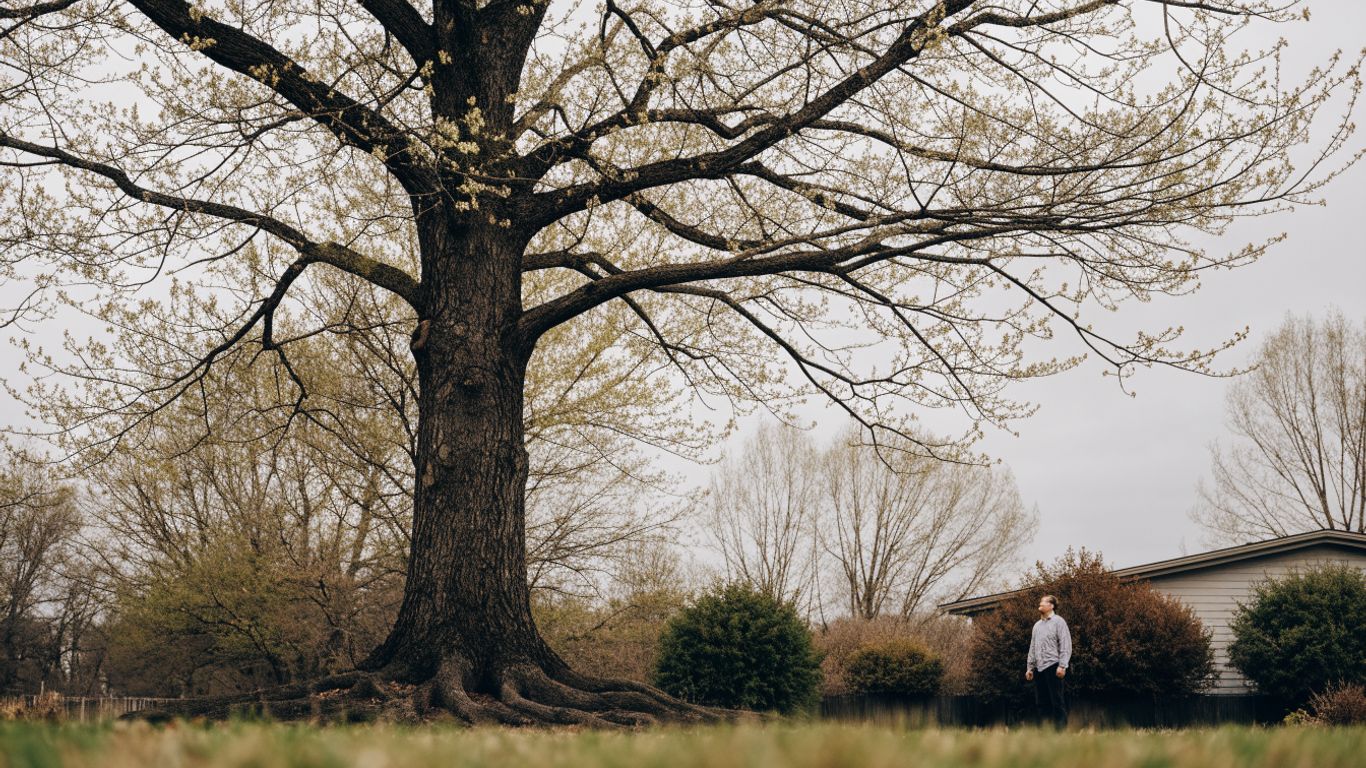
Look for broken or suspended branches, fresh cracks in the trunk or major limbs, areas of missing bark, and sections of the crown that appear unusually sparse. At ground level, note exposed or disturbed roots, soil lifting, a new lean, or fungus or mushrooms growing near the base. Compare what you see with the tree’s usual form if you know it; changes are often easier to notice that way.
Also consider the tree’s surroundings. Recent digging, construction, vehicles parked over roots, or water collecting near the trunk may affect its condition. If construction is planned near your trees, an arborist report documents which trees need protection. Keep your observations simple: take photos from a safe distance and record which trees concern you. If you see a hanging limb, a significant crack, or movement at the base, stay out of the area and arrange a professional tree assessment.
Booking an assessment before the spring thaw puts your trees on the schedule ahead of storm season and gives us time to plan any pruning or support work properly. Call (705) 242-8324 to book an assessment.
How to Protect Trees from Spring Storms Before the Weather Turns
The best preparation is usually targeted care, not drastic last-minute work. Start early enough to have a tree assessed and to schedule appropriate maintenance before severe weather is in the forecast. See the best time to prune trees in Ontario to plan your timing. A professional can distinguish routine pruning needs from structural concerns that call for a different approach.
Prune Out Deadwood and Weak Branches
Dead, broken, or weakly attached branches can become hazards when wind loads the canopy. Professional tree pruning may reduce some risks, but it should preserve the tree’s natural structure rather than simply remove as much growth as possible. If you are deciding what to flag for an arborist, a short set of observations can make the conversation more useful:
- Note dead or broken branches that are visible from the ground.
- Point out limbs with cracks or weak-looking attachments.
- Identify branches over roofs, paths, parking areas, or play spaces.
- Mention previous storm damage or recent changes in the tree.
Use these notes to describe what you have seen, not as a do-it-yourself pruning plan. Removing large limbs or cutting without understanding how a branch is attached can create additional hazards. For more on spring storm preparation, consider how inspection and pruning fit into an overall plan, then ask an arborist what work is suitable for your trees.
Support Weak Branch Unions With Cabling and Bracing
Arborist installing a support cable on a tree with a weak branch union
Some trees have multiple stems or branch unions that may warrant structural support. Tree cabling and bracing can be considered in particular circumstances, but it is not a universal fix and does not make a tree storm-proof. An arborist should assess the tree’s structure, condition, and surroundings before recommending any support system.
If support is proposed, ask what concern it is intended to address and what monitoring or future care may be needed. Do not install cables or hardware yourself based on appearance alone. The right approach depends on the tree, and a professional assessment helps you weigh support against pruning or other options.
Late winter is a good time to plan structural work, because bare branches make a tree’s structure easy to see. Booking before spring storms arrive keeps your arborist’s schedule open and the work unhurried. Call (705) 242-8324 to book an assessment.
Build Stronger Roots With Mulch, Water, and Soil Care
Roots need suitable soil conditions, but routine care cannot guarantee that a tree will withstand every storm. Keep mulch spread in a broad, shallow layer over the root area, and leave space around the trunk rather than piling it against the bark. In dry periods, water thoughtfully according to the tree’s needs and local conditions; avoid assuming that frequent watering is helpful when the ground is already saturated.
Different soil and site problems call for different responses. This table can help you identify what to observe before seeking advice; it is not a diagnosis or a replacement for an on-site assessment.
| What you notice | Why it deserves attention | A sensible next step |
|---|---|---|
| Mulch piled against the trunk | Moisture and bark contact may be undesirable | Pull mulch back from the trunk |
| Soil often compacted or covered | Roots may have limited room and air exchange | Avoid further traffic and ask about the site |
| Water pooling near the tree | Drainage conditions may affect the root zone | Note when and where pooling occurs |
| Recent digging near roots | Root disturbance may affect stability or health | Share the timing and location with an arborist |
These observations help you explain the tree’s growing conditions without disturbing the roots yourself. Avoid trenching, changing grades, or applying treatments without understanding the cause of the problem. A site-specific recommendation is more useful than a generic storm-preparation shortcut.
Common Mistakes That Make Spring Storm Damage Worse
A common mistake is waiting until a storm warning to start major pruning or removal work. Rushed cutting can leave poor wounds, remove healthy structure, or put the person doing the work in danger. If you notice a concern as storms approach, keep people clear of the area and contact an arborist rather than attempting a hurried fix.
Another mistake is treating every lean, cavity, or patch of missing bark as proof that a tree must come down. These signs need context: their size, location, history, and the tree’s overall condition all matter. A qualified assessment can help you understand the level of risk and the available options instead of making a permanent decision from one visual clue.
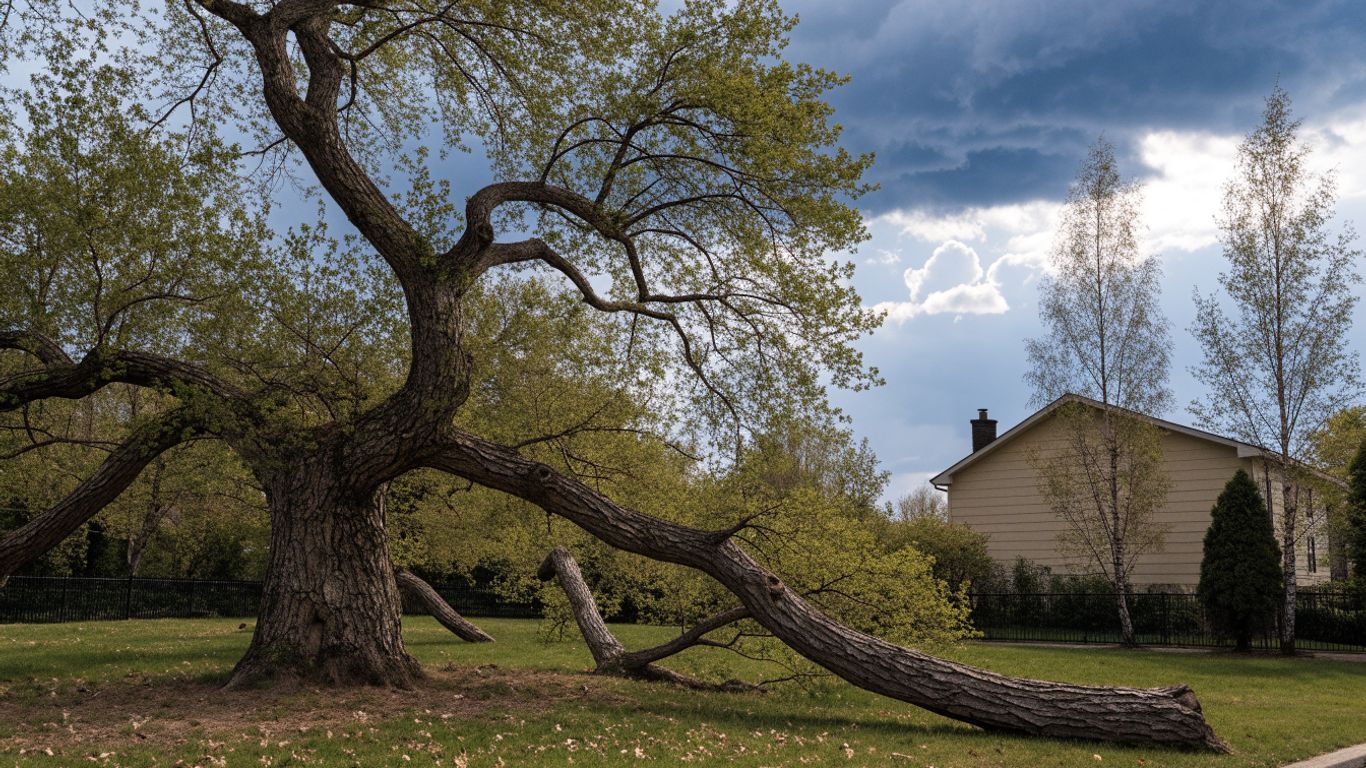
Waiting for a storm warning leaves little room for careful work. Booking early keeps your arborist’s schedule open and lets the job be done properly instead of in a rush. Call (705) 242-8324 to book an assessment.
What to Do After a Spring Storm (and When to Call an Arborist)
Cracked tree limb hanging after a spring storm on a Simcoe County property
After a storm, look for hazards from a safe location before going into the yard. Stay well away from downed or damaged utility lines, hanging branches, split trunks, and trees that appear unstable. Do not touch a tree or branch that may be in contact with a power line; contact [LOCAL UTILITY, e.g. your hydro provider: FILL and confirm] or emergency services.
If there is no immediate danger, document visible damage from a distance and keep people and pets away from the affected area. Avoid pulling on suspended branches, cutting limbs, or trying to straighten a leaning tree. A branch that seems still may be held under tension, and additional movement can make a hazardous situation worse.
Call our emergency tree service when a major limb is cracked or hanging, the trunk has split, roots appear to be lifting, or a tree has shifted noticeably. If the tree threatens a structure or a regularly used area, explain that when you request an assessment. Our winter storm guidance also covers staying safe around tree hazards and recognizing when professional support is needed.
Get Your Trees Storm-Ready With a Certified Arborist in Barrie
A certified arborist can assess the tree as a whole, including its structure, visible defects, and setting. That matters because a branch that looks concerning from the ground may need a different response than a cracked trunk or disturbed root zone. An assessment gives you a clearer basis for deciding what to do before storm season.
When you contact our team, share which trees concern you, what changes you have noticed, and whether limbs are over buildings, paths, or other busy areas. Ask what work is recommended, why it is appropriate, and whether any follow-up is needed. A clear explanation helps you understand both the immediate work and the tree’s longer-term care. If you are not sure where to begin, start with the trees closest to your home and the areas people use most. You do not need to diagnose every defect before making a call. A focused assessment can help you prioritize care and avoid risky work on your own. Our certified arborists provide tree care in Barrie and across Simcoe County.
Spring Storm Tree Protection FAQ
Spring storm preparation raises practical questions, especially when you are trying to decide whether a tree needs attention now or can wait. The answers below offer general guidance; the right choice depends on the individual tree and site.
Does Pruning Really Reduce Storm Damage?
Proper pruning can remove dead, damaged, or poorly attached branches and may reduce some storm-related hazards. It cannot make a tree immune to high winds or heavy rain, and excessive or poorly timed cutting can cause problems. An arborist can advise whether pruning is suitable for your tree.
How Much Does Pre-Storm Tree Work Cost in Barrie?
Costs vary with the type and scale of work, tree size, access, equipment needs, and site conditions. [FILL with your real ranges, e.g.: Pruning a typical residential tree usually runs $[LOW] to $[HIGH] CAD; cabling and bracing $[LOW] to $[HIGH] CAD per tree; removal $[LOW] to $[HIGH] CAD.] An inspection or quote is the best way to understand the cost for your property. Ask for a clear description of the proposed work before agreeing to it.
Can I Prune Large Branches Myself Before a Storm?
Large branches are not a safe do-it-yourself project for most homeowners. They may be heavy, difficult to control, or under tension, and working at height adds risk. Keep clear and ask a qualified arborist to assess the branch and recommend a safe approach.
When Should You Inspect Trees for Spring Storm Risks?
Inspect trees after winter and before storms become frequent, then revisit them after severe weather. If you notice a new crack, hanging limb, or change in the tree’s position, keep clear and seek advice promptly.
Does Every Damaged Tree Need to Be Removed?
No. The appropriate response depends on the extent and location of damage, the tree’s condition, and the risk to people or property. An arborist can explain whether pruning, monitoring, support, or tree removal should be considered.
Is It Safe to Inspect a Storm-Damaged Tree Up Close?
Not always. Keep away from hanging branches, split trunks, unstable trees, and anything near utility lines. Observe from a safe distance and contact the appropriate professional if a hazard is present