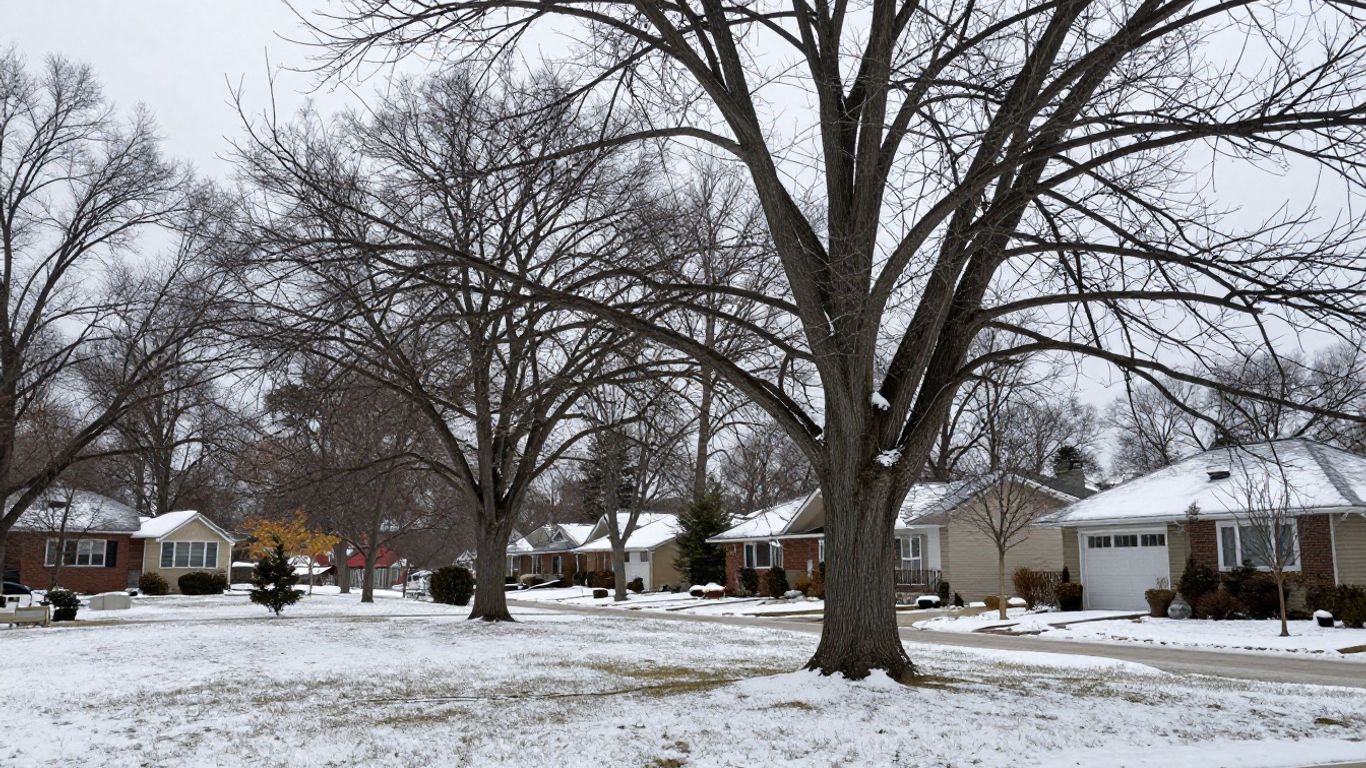
Every tree on your property is running on its own internal clock — and it has absolutely no idea what month your calendar says it is. It knows temperature, daylight, and dormancy. It doesn’t know that “late winter” is the answer every gardening blog gives, and it definitely doesn’t know the difference between a maple and a magnolia, an oak and an apple tree, all of which are quietly operating on completely different schedules under the same Barrie snowfall.
That mismatch — a generic calendar rule applied to a very specific living thing — is where most DIY tree trimming goes sideways. Someone reads “late winter is best,” grabs a pruning saw on the first mild Saturday in February, and takes a few feet off a lilac that was about to bloom on last year’s growth. The cut wasn’t wrong in theory. It was wrong for that tree.
So let’s actually answer the question properly: when should you trim a tree in Barrie? The honest answer is “it depends” — on the species, the reason for the cut, and the weather that day — but “it depends” is a lot more useful once you know exactly what it depends on.
Key Takeaways
- Timing hinges on the tree, the reason for pruning, and the day’s weather — not just the month on the calendar.
- Late winter is a solid, practical window for many deciduous trees in Barrie, but far from a universal rule.
- Flowering trees, evergreens, fruit trees, and structurally weak trees often need their own separate timing.
- Hazardous or damaged branches get removed the moment they’re found — waiting for “the right season” isn’t worth the risk.
- Skip pruning during extreme cold, active storms, or unstable footing, no matter what the calendar says.
- The moment height, power lines, or major limbs enter the picture, that’s the moment to call in trained help.
Why “Just Trim It in Late Winter” Isn’t the Whole Answer
Ask five different sources when to trim trees in Ontario and four of them will say some version of “late winter, when the tree is dormant.” They’re not wrong — they’re just answering a simpler question than the one most homeowners are actually asking.
Dormancy really does make trimming easier. With no leaves in the way, crossing branches, weak unions, and dead wood are all suddenly visible instead of hidden behind a canopy. Insect and disease activity drops off in the cold, so a fresh cut has less to worry about. And the tree is heading into its next growing season right as the work wraps up, which means faster wound closure and a strong flush of new growth.
But Barrie adds its own wrinkle that the generic “late winter” advice never accounts for. This isn’t a mild coastal climate with a gentle, forgiving winter — it’s deep cold, frozen ground, heavy snow loading on branches, and sudden thaws that turn a stable yard into an ice rink overnight. “Late winter” here isn’t a fixed date on the calendar. It’s a weather window, and some years that window is wide open in early February and closed again by a cold snap two weeks later.
The purpose of the cut matters just as much as the timing. Clearing deadwood, improving structure, opening up clearance over a roof, and reducing one specific hazard are four different jobs with four different urgency levels — and a mature tree with large limbs or visible defects deserves a proper look before anyone makes a single cut.
Late Winter: A Genuinely Good Window (For Many Trees)
For a lot of deciduous trees around Barrie, late winter earns its reputation honestly. The structure is fully visible, disease pressure is low, and the timing lines up well with the tree’s own growth cycle. It’s a real window of opportunity — it’s just not a blanket rule.
That window should flex around real conditions, not just the date. A branch that’s dangerously split, rubbing against your roofline, or hanging over a walkway doesn’t get to wait for late winter — that’s a today problem, whatever the calendar says. On the flip side, routine shaping should never happen during a genuine deep freeze, when wood turns brittle and difficult footing quietly raises the risk of a bad cut, or worse, a bad fall.
Northshore Tree Experts includes tree trimming and pruning among its core services, which matters most when a property needs a genuinely planned approach rather than an improvised cut made from the ground with the wrong tool. Sometimes the right scope is surprisingly small — removing a handful of problem branches, rather than thinning an entire crown that didn’t actually need it.
A quick way to sort routine from urgent:
| Situation | Often suitable timing | Main consideration |
|---|---|---|
| Routine deciduous-tree pruning | Late winter to very early spring | Confirm the tree is healthy and dormant |
| Spring-flowering tree shaping | After flowering | Preserve next season’s flower buds |
| Dead or hazardous branch removal | Promptly, when safe | Safety takes priority over the calendar |
| Evergreen maintenance | Case by case | Avoid unnecessary removal of live foliage |
Treat this as a starting point, not gospel — a tree’s age, condition, species, and exactly where the problem branches sit can all shift the right answer.
How Tree Species Actually Change the Right Time to Cut
There is no single trimming date that works for every tree in Barrie, full stop. Deciduous trees, conifers, flowering trees, and fruit trees all respond differently to a cut, and knowing what you’re looking at before you pick up a saw is the single easiest way to avoid a disappointing result.
Flowering trees are the clearest example of how this goes wrong. Some varieties flower on wood that grew the previous year — prune those in late winter and you can accidentally remove this year’s entire flower show before it ever had a chance. Others flower on new growth and tolerate a completely different schedule. For fruit trees, the goal usually isn’t just shape — it’s structure and productivity, which means timing should follow the tree’s own growth pattern rather than a generic rule pulled from a gardening blog.
Evergreens deserve their own caution too. Cut into the wrong part of certain conifers and you can leave a bare patch that simply doesn’t fill back in, unlike deciduous trees that regenerate more forgivingly. If you’re not confident identifying what you’re looking at, that uncertainty is itself a good reason to get a second opinion before the first cut goes in.
The One Local Detail Almost Nobody Mentions
Here’s something that rarely makes it into generic “when to prune” articles: in most cases, you don’t need a permit to trim or remove a tree on a typical residential lot in Barrie. The City only requires a permit when a tree is part of a woodlot — a forested area of half an acre or larger — and dead or hazardous trees are exempt even then. If you’re not sure whether your property qualifies, that’s a five-minute question worth asking before you assume you need to navigate red tape you actually don’t.
Should You Trim a Tree Before or After Winter?
For routine work, the before-or-after-winter question usually comes down to three things: dormancy, visibility, and the tree’s flowering cycle. Late fall can work well once the leaves have dropped. Late winter is often preferred because the next growing season is close and the branch structure is still fully visible. Neither is automatically the right answer for every species — that’s the theme running through this entire guide.
Trimming before winter can genuinely make sense when a known weak branch is likely to catch snow or ice and turn a small problem into a big one. But removing too much healthy growth right before a harsh season adds stress at exactly the wrong time. After winter, an inspection often reveals broken limbs, hanging branches, or rubbing points that were completely hidden under snow all season — those findings deserve a look before any routine shaping begins.
Weather and access are hard limits here, not suggestions. Don’t work beneath a tree during active snowfall, high winds, or unstable ice, and don’t climb on icy ground for any reason. A genuinely safe work window matters more than following a popular seasonal slogan you saw online.
A fast pre-work check before anyone picks up a tool:
- The ground and access route are stable enough for people and equipment.
- The tree isn’t carrying heavy, unstable snow or ice.
- No branch is touching or threatening a power line.
- The intended cuts have a clear purpose and a manageable scope.
Once those boxes are checked, you’ll usually know whether the job is genuinely minor or whether it’s time to book qualified help. For high branches, large limbs, or anything with an uncertain defect, the second option is almost always the safer call.
Common Tree-Trimming Mistakes Homeowners Make
Most trimming problems start with a completely reasonable intention — open up a view, remove a nuisance branch, tidy things up. Where it goes wrong is in the execution: too many cuts, cuts placed poorly, or a tree’s natural shape treated like it’s a hedge that needs squaring off. Every cut should have a clear purpose before the saw ever touches bark.
Another quiet mistake: assuming all dead-looking wood is harmless to handle. A branch can be under real tension, propped up by another limb, or hanging directly over a roof, driveway, or service line — none of which is obvious from the ground. Northshore Tree Experts offers tree risk assessment specifically for this reason: the question often isn’t just “how do I trim this,” it’s “does this branch actually represent a bigger hazard than it looks like.”
Scale matters too. Small hand-pruning is reasonable for accessible young growth within easy reach. Large limbs need real equipment, real planning, and a genuine understanding of how the branch will move as the cut progresses — the physics change entirely once you’re dealing with real weight and leverage. If the work can’t be done safely while standing on the ground, it shouldn’t become a weekend project.
Tree Trimming After Snow, Ice, or Storm Damage
Storm damage changes the entire question. A freshly broken limb might be hanging by a single strip of wood, caught in another branch, or resting against a structure under tension that isn’t obvious at a glance. The safest response is simple: keep people and pets clear, don’t touch the tree, and assess from a distance before deciding anything.
Northshore Tree Experts lists emergency tree service specifically for situations like this — prompt attention after snow, ice, or wind damage, which is a fundamentally different job from routine crown shaping. The immediate priority is controlling danger and preventing further damage; the more considered plan for the rest of the tree comes after that.
Never approach a tree that’s touching a power line, and never operate a chainsaw from a ladder or beneath a suspended limb — both are among the most common ways storm cleanup turns into a genuine emergency. Once the area is confirmed safe, damaged branches can be properly evaluated for clean removal, possible support, or a determination that the whole tree has become structurally unstable. Storm work should always favour caution over a quick cosmetic fix.
A proper post-storm inspection looks past the obvious broken branch — checking the trunk, major unions, and the surrounding ground too. Hidden cracks and shifted roots can create risks that only become visible days later, especially once the ground thaws or another round of wind moves through.
What Does Tree Trimming Actually Cost in Barrie?
Nobody publishes real numbers on this, so here’s a straightforward breakdown based on typical Ontario pricing:
- Small trees (under ~20 ft): roughly $150–$450
- Medium trees (~20–50 ft): roughly $300–$800
- Large trees (50+ ft): roughly $600–$1,800+
- Emergency or storm-response work: often billed at a premium hourly rate given the urgency and access challenges
The real number depends on tree size, accessibility, proximity to structures or power lines, and how much of the crown needs attention — which is exactly why a proper on-site assessment beats any generic online estimate. It’s also worth knowing that trimming typically runs 50–75% cheaper than full removal, so a healthy tree with a fixable problem is very rarely a “just take it down” situation.
Why Local Experience Actually Matters Here
A lot of tree-care advice online is written for “Ontario” broadly, or worse, copy-pasted between cities with the location swapped and nothing else changed. Barrie’s specific mix of heavy snow loading, hard freeze-thaw cycles, and sudden thaws is not the same as Toronto’s milder winter, and advice that ignores that difference can genuinely lead to worse outcomes — pruning a stressed tree at the wrong moment, or missing a hazard that only shows up under our specific conditions.
Northshore Tree Experts has been serving Barrie and Simcoe County since 2018 as a fully insured, ISA Certified Arborist-led, family-owned business — recognized as Barrie’s Readers’ Choice Best Tree Service multiple years running. That’s not a detail included for the sake of it: it’s the difference between advice built around Barrie’s actual seasonal reality and advice that just happens to mention the city’s name.
Conclusion
The honest answer to “when should you trim a tree in Barrie” is that late winter is a strong default for a lot of deciduous trees — but species, purpose, weather, and safety can all change that answer, sometimes significantly. A careful inspection and a selective approach will almost always serve the tree better than a fixed calendar rule, and storm damage or hazardous limbs deserve prompt professional attention over any seasonal guideline.
Get a Tree Care Quote
If a Barrie tree needs careful pruning, a risk assessment, or emergency attention, contact Northshore Tree Experts for a practical next step based on your specific tree and property — not a generic rule pulled from a calendar.
Frequently Asked Questions
Is late winter the best time to trim every tree?
No. Late winter suits many dormant deciduous trees, but flowering trees, fruit trees, evergreens, and trees with active problems may need a different schedule entirely.
Can I trim a tree in the fall?
Fall can work well after a deciduous tree becomes dormant, provided the weather cooperates and the timing matches the specific species and its condition.
Should flowering trees be pruned before they bloom?
Often, pruning after flowering helps preserve buds that formed on older wood. The exact timing depends on the species and where on the branch it produces flowers.
What branches should be removed first?
Dead, broken, diseased, crossing, or hazardous branches are the usual priorities, but a branch’s position and the tree’s overall structure should factor in too.
Is it safe to trim a tree after an ice storm?
Not while ice is unstable, branches are suspended, or power lines may be involved. Keep clear and arrange a professional assessment once the area and conditions are genuinely safe.
How much of a tree can be trimmed at once?
It depends on species, age, health, and the purpose of the pruning. Removing too much live growth in one pass can stress the tree and damage its natural structure long-term.
Do I need a permit to trim or remove a tree in Barrie?
In most cases, no — Barrie only requires a permit when a tree is part of a woodlot half an acre or larger, and dead or hazardous trees are exempt even then.
When should I call a professional tree trimmer?
Call for help when branches are high, large, near structures or power lines, damaged by a storm, or simply beyond the safe reach of ground-based tools.