Key Takeaways
- The difference between tree trimming and pruning comes down to purpose, not just the act of cutting branches.
- Trimming focuses on shape, size, and overgrowth.
- Pruning targets branches that affect a tree’s health, structure, or safety.
- Dead, damaged, diseased, or crossing limbs usually need prompt attention.
- The right service depends on the tree’s condition, not a fixed schedule.
- Large trees, tricky access points, or nearby hazards call for a professional assessment.
Why People Confuse Trimming and Pruning
Most homeowners use “trimming” and “pruning” interchangeably — and it’s easy to see why. Both involve cutting branches, both change how a tree looks, and both are usually requested in the same phone call. But the difference between tree trimming and pruning actually comes down to why the cut is being made, not just what tool is used.
Every cut a tree receives changes its balance and leaves a wound it has to heal. That’s why cutting shouldn’t be about making a canopy look smaller — it should be guided by a clear reason. Trimming is about controlling growth and appearance. Pruning is about addressing a specific problem with a specific branch.
Knowing this distinction helps you describe your tree’s issue more accurately. Saying a tree “needs a trim” doesn’t tell an arborist whether branches are scraping your roof, blocking a walkway, or hiding early signs of decay. The more specific you can be, the faster a professional can figure out whether your tree needs shaping, selective removal, or both.
What Is Tree Trimming?
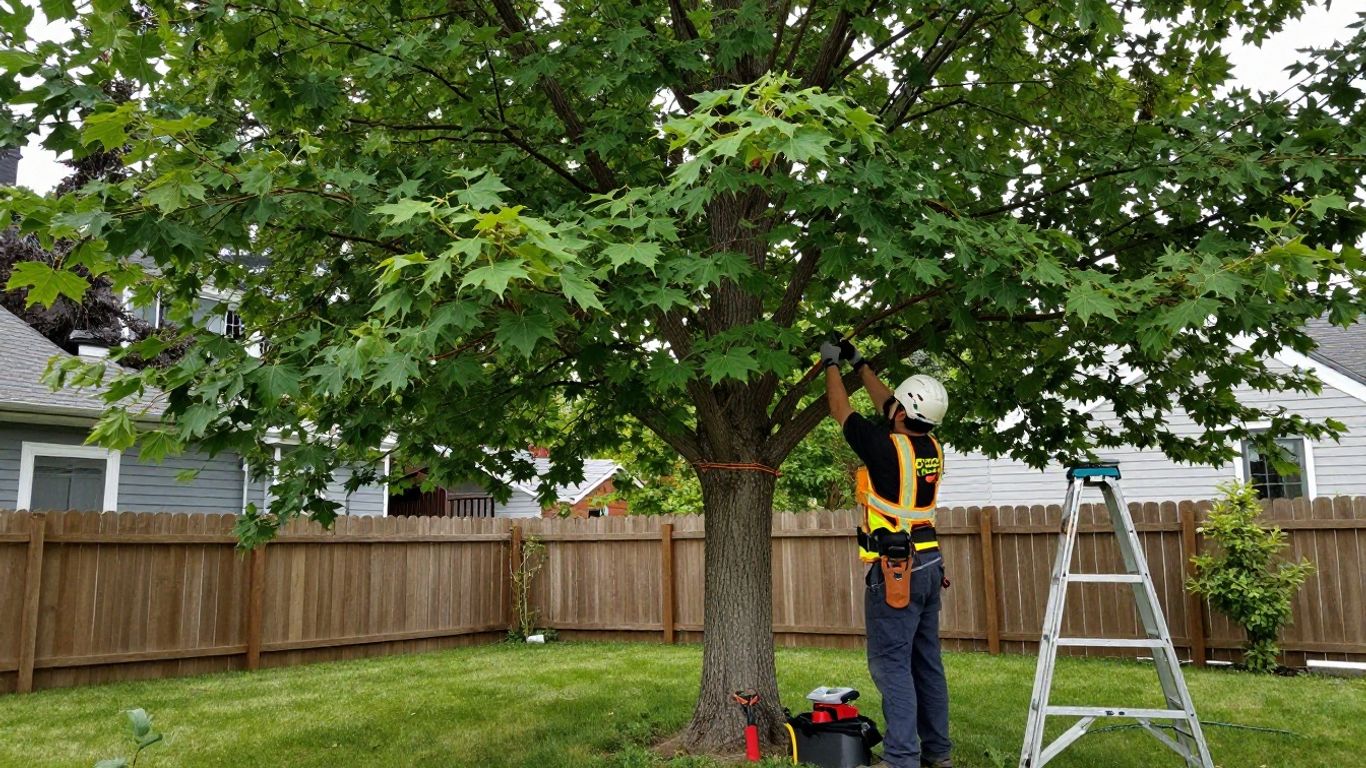
Tree trimming means cutting back overgrown branches, shoots, or foliage to manage a tree’s size, shape, and general appearance. For homeowners searching for barrie tree trimming, it’s typically what they picture when they want a tree to look tidier or less unruly — keeping growth clear of rooflines, fences, walkways, and power lines.
Good trimming still requires restraint. Cutting away too much foliage in one visit can stress the tree, expose interior branches that weren’t built for direct sun, or trigger uneven regrowth. A well-executed trim respects the tree’s natural shape rather than forcing it into something artificial.
Local companies like Northshore Tree Experts commonly bundle this under “Tree Trimming Pruning” as a single service line — a reflection of the fact that most properties need both overgrowth managed and specific problem branches addressed in the same visit.
What Is Tree Pruning?
Tree pruning is the selective removal of branches for reasons tied to health, structure, or safety — not appearance alone. This includes dead or broken limbs, diseased wood, branches rubbing against each other, or growth attached at a weak union.
Rather than trimming the outer edges of a canopy evenly, pruning zeroes in on individual branches based on the role each one plays in the tree’s overall structure. It’s also a forward-looking practice: an arborist may remove a competing leader or a crowded branch attachment now to prevent a bigger structural failure years down the road. Some of the most valuable pruning cuts aren’t obvious from the ground.
Pruning becomes especially important after storm damage or when a tree shows signs of decline. Cutting without understanding why a tree is struggling can strip away healthy growth while leaving the actual hazard in place.
Tree Trimming vs. Pruning: Side-by-Side Comparison
The clearest way to separate the two is by the question each one answers:
- Trimming asks: “How can this growth be managed?”
- Pruning asks: “Which branches need to come off to protect the tree’s health, structure, or safety?”
| Consideration | Tree Trimming | Tree Pruning |
|---|---|---|
| Main purpose | Manage shape, size, or overgrowth | Address health, structure, or safety concerns |
| Typical focus | Straggling growth and clearance | Dead, damaged, diseased, crossing, or weakly attached branches |
| Cutting style | Broader canopy management | Selective, branch-by-branch removal |
| Common reason | Improve appearance, keep growth off the property | Support a sound structure, prevent future problems |
This is a starting point, not a diagnosis — weather, species, tree age, and location all factor into what a given tree actually needs.
It also explains why a simple request for “a trim” sometimes turns into a longer conversation with your arborist. If a limb is cracked or two branches are rubbing together, appearance is only half the story. A complete service plan often includes trimming for clearance and pruning for structural soundness, with each addressing a different goal.
Timing matters too. Many trees respond best to pruning during their dormant period, while trimming is often scheduled around active growth and clearance needs. Because this varies by species and climate, treat any general timing advice as a starting point rather than a rule.
Signs Your Tree Needs Trimming, Pruning — or Both
Trees typically signal maintenance needs before they become urgent. Watch for:
- Branches scraping your roof, siding, windows, or utility lines
- Dead, broken, hanging, or visibly cracked limbs
- Branches that cross, rub, or grow from crowded attachment points
- Uneven or dense new growth encroaching on walkways
- A canopy that changed noticeably after wind, snow, or ice
Observe from a safe distance — don’t climb or use a ladder if the tree is tall, near power lines, or hard to access. Once you’ve spotted the issue, match it to the right service: overgrown tips blocking a path usually call for trimming, while a cracked or crossing branch is a pruning job. Many trees need both, but the decision should follow the specific branch, not the label used when booking the appointment.
Which Service Does Your Tree Actually Need?
Start with what you’re trying to fix. If the issue is excessive growth, an uneven outline, or clearance around a structure, trimming likely solves it. If you’re dealing with deadwood, disease, a weak branch union, or storm damage, pruning deserves the closer look.
Some situations shouldn’t be handled as a DIY project at all — a large limb hanging over a roof, a tree near electrical lines, or a trunk with a visible crack all carry real risk and are worth a professional assessment before any cutting happens.
When you reach out for help, skip guessing at the service name and just describe what you see: the tree’s approximate height, nearby structures, recent weather events, and any damaged-looking branches. Photos taken from a safe spot can help too, though they’re no substitute for an in-person look.
The goal is never to remove the most wood possible — it’s to solve the actual problem while preserving the tree’s natural shape and future growth.
Get a Clear Tree Care Plan
If you’re noticing overgrown, damaged, or too-close-for-comfort branches, Northshore Tree Experts can walk through what your property actually needs — trimming, pruning, or both — based on a clear look at the tree itself.
Conclusion
The difference between tree trimming and pruning isn’t just semantics — trimming manages growth and appearance, while pruning selectively addresses a tree’s health, structure, and safety. Understanding which one your tree needs helps you avoid unnecessary cuts and ask sharper questions, especially with mature, damaged, or high-risk trees.
Frequently Asked Questions
Is tree trimming the same as tree pruning?
No. Both involve cutting branches, but trimming generally manages shape, size, or overgrowth, while pruning is more selective and focused on health, structure, or safety.
Which service removes dead branches?
Dead branches are typically handled through pruning, since their removal relates to tree health and safety. The right approach depends on the branch’s size, position, and condition.
Can a tree need trimming and pruning at the same time?
Yes. A tree can have overgrown sections that need managing alongside individual branches that need selective removal — the two goals are still worth treating separately.
How often should trees be trimmed?
There’s no universal schedule. Growth rate, species, location, desired clearance, and the tree’s overall condition all affect timing, which is why an assessment is more useful than a fixed annual rule.
When is the best time to prune a tree?
Timing depends on species, climate, and the reason for pruning. Because seasonal conditions affect how a tree responds, a professional recommendation is worthwhile for any substantial pruning work.
Should I trim a tree after a storm?
Inspect it from the ground for broken, hanging, or cracked limbs, but avoid approaching unstable branches. Storm-damaged trees can hold hidden tension and often require professional help.
Is it safe to trim a tall tree myself?
Tall trees, trees near power lines, and branches over buildings all carry significant risk. Avoid climbing or using a ladder for difficult cuts — arrange a professional assessment instead.