Key Takeaways
- Winter storm damage to trees comes from ice, snow, wind, and repeated freezing and thawing. A little preparation—and a cautious response after a storm—can help you protect people and property.
- Watch for cracked limbs, weak branch unions, and signs of root movement.
- Arrange pruning or structural work before severe weather arrives.
- Avoid climbing, cutting overhead limbs, or working near downed power lines.
- After a storm, keep clear of unstable trees and document visible damage from a safe distance.
- Ask a qualified arborist to assess serious damage and explain your options.
Need help with a storm-damaged or at-risk tree? Call Northshore Tree Experts at (705) 315-0210.
How Winter Storms Damage Trees in Barrie and Simcoe County
Winter weather around Barrie and Simcoe County can shift from light snow to heavy, wet precipitation, strong winds, and periods of thawing and refreezing. Those changes put different kinds of pressure on branches, trunks, and roots. Forecasts are uncertain, so check Environment Canada alerts and the Government of Canada’s winter storm preparedness guide before each storm. Understanding how winter stress acts on a tree helps you spot problems before they become urgent.
Ice Accumulation and Heavy Snow Loads
Ice coats branches with extra weight, while a deep, wet snowfall can bend limbs beyond their usual range. Smaller branches may snap outright; larger limbs can split where they join the trunk, leaving damage that is easy to miss from below. Evergreens often hold snow on their foliage, while bare deciduous trees still face stress on branch tips and unions. If a branch bends under a load, avoid shaking or striking it: the limb may be brittle, and falling ice can cause injury. Barrie saw this firsthand in the March 30, 2025 ice storm, which the City reports cost more than 5,000 street and park trees and damaged roughly 46,000 municipal trees.
High Winds, Frozen Ground, and Freeze-Thaw Stress
Wind can push a tree’s crown back and forth, concentrating force at weak joints or in the soil around the roots. Frozen ground may limit how roots respond to that movement, especially when a tree is already poorly anchored. Repeated thaws and hard freezes can also stress bark and exposed wood, though the effects vary by tree and site. Seasonal patterns are one part of the picture; a tree’s condition and the way it is exposed to wind matter too.
Which Trees Are Most at Risk This Winter
No single species or size guarantees winter damage. Trees with existing defects, crowded growth, or a history of storm stress may need closer attention than healthy trees in sheltered locations. Look at the whole tree, including its trunk and the ground around its base, rather than judging risk by appearance alone. Trees weakened by pests or disease are also more likely to fail under snow and ice. For deciduous trees, unusual timing of leaf loss can be worth investigating; early leaf drop signs may point to issues beyond the normal seasonal change.
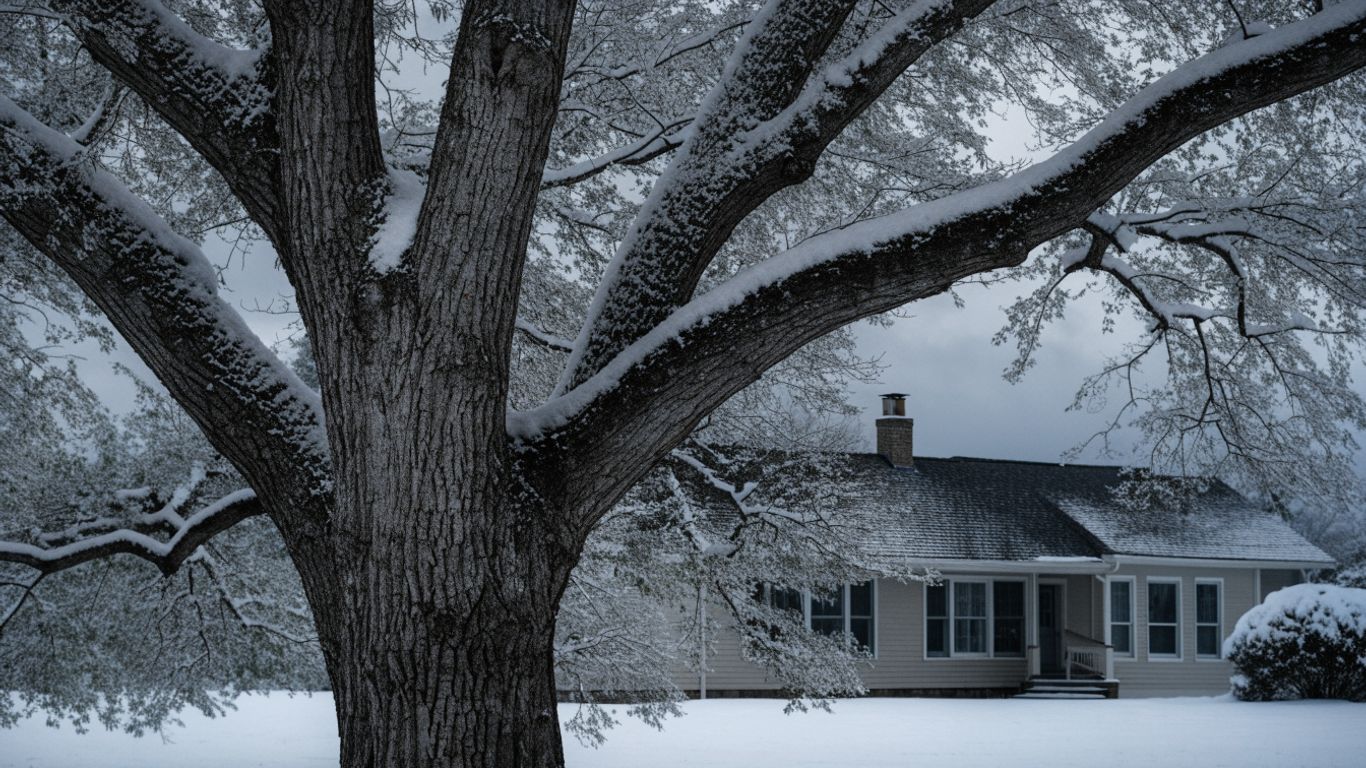
Structural Weak Points That Fail First
Cracks, narrow branch unions, deadwood, and old wounds can become weak points when wind or ice adds pressure. A tree with multiple trunks may have a tight union that deserves an expert’s attention, while a recent change in the soil around the base can signal that roots are shifting. The table below can help you organize observations, but it cannot diagnose a tree from a distance.
| What you notice | Why it matters | Sensible next step |
|---|---|---|
| A cracked or hanging limb | It may fall without warning | Keep people clear and seek an assessment |
| A split or narrow branch union | The connection may be under strain | Ask an arborist to inspect the union |
| A new lean or lifted soil near the trunk | Roots may have shifted | Stay clear and arrange prompt evaluation |
| Dead branches in the crown | They may break under added load | Have their condition assessed before storm season |
Treat these signs as reasons to pay attention, not as a substitute for an on-site tree risk assessment. A tree that appears stable can still have hidden damage, and a professional can help distinguish a manageable defect from an immediate hazard.
How to Protect Your Trees Before the Storm Hits
The most useful preparation usually happens well before a storm warning. Walk your property when conditions are calm and note trees close to homes, driveways, walkways, and overhead lines. If you find concerning defects, schedule an assessment rather than waiting for heavy snow or ice to make access difficult. Planning early gives you time to understand which work is appropriate and what can safely wait.
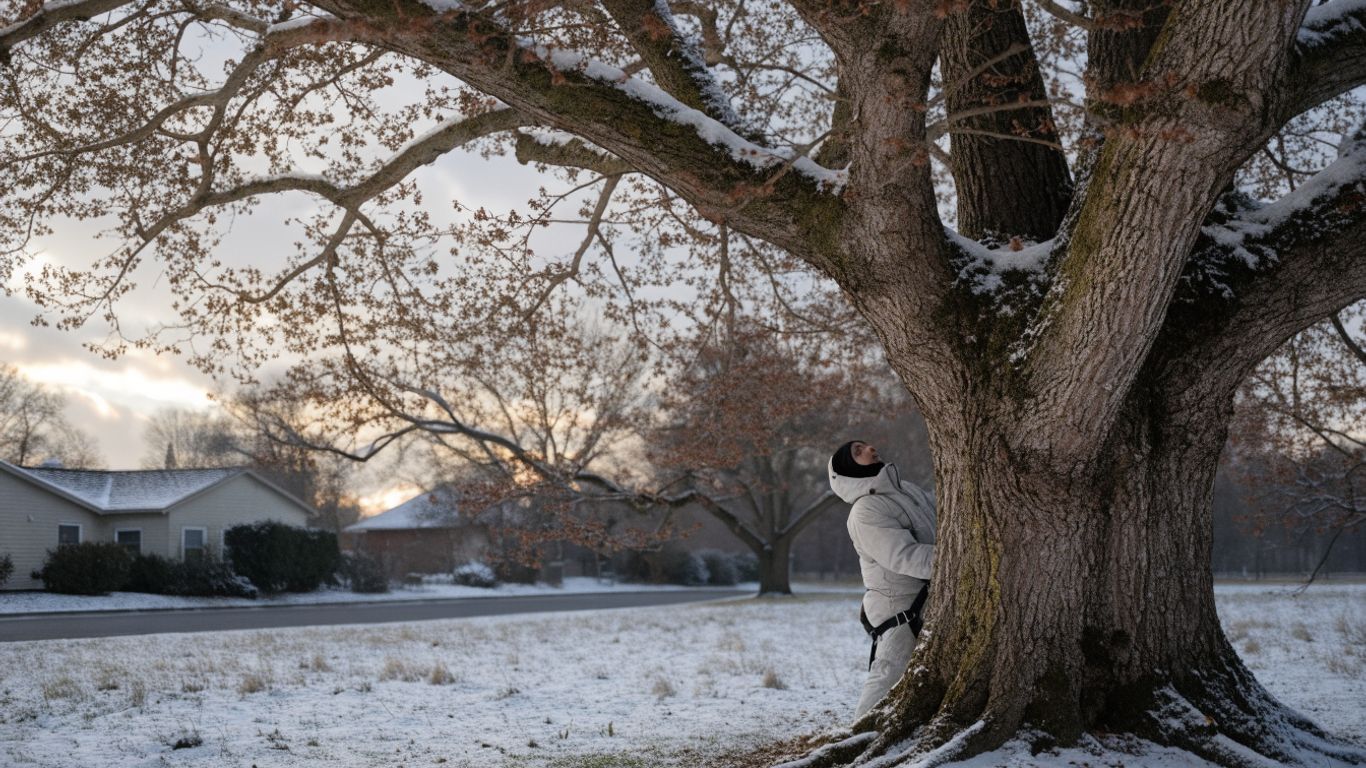
Pre-Winter Pruning, Cabling, and Bracing
Professional tree pruning can remove dead, damaged, or poorly positioned branches, but the right cuts depend on the tree and the problem. Tree cabling and bracing may be considered for certain structural concerns after an expert assessment; these measures are not suitable for every tree. Avoid topping a tree or making large cuts simply to reduce its size, since poorly chosen pruning can create additional stress. Ask the arborist to explain the condition they see, the proposed work, and how it addresses the risk.
Booking this work before the first heavy snowfall keeps access easy and your arborist’s schedule open. Call (705) 315-0210 to book an assessment.
What Homeowners Can (and Can’t) Safely Do Themselves
You can make a useful visual check from the ground and keep paths clear of loose debris, but storm preparation has limits. Overhead branches, unstable trees, and powered equipment can turn a routine task into a serious hazard. A few low-risk steps can help you prepare without taking on work that calls for training or specialized equipment:
- Move patio furniture, tools, and other loose items away from trees.
- Keep people and pets clear of dead or hanging branches.
- Note visible cracks, changes in lean, or disturbed soil from a safe distance.
- Arrange professional help for pruning, cabling, bracing, or work near utility lines.
If a branch is high, heavy, or close to a building or wire, leave it alone and request qualified help. A careful inspection and a clear plan are safer than trying to finish a risky job before the forecast worsens.
What to Do After Winter Storm Damage
Once the storm has passed, resist the urge to start cutting right away. Branches may be suspended, under tension, or tangled with power lines, and a tree can shift after the initial damage. First, keep people away from the affected area and look for hazards only from a safe location. Then document what you can see and arrange an assessment if the damage appears serious or uncertain. If a tree has already come down on your home, read what to do right away when a tree falls on your house.
Warning Signs a Storm-Damaged Tree Needs Urgent Attention
A newly split trunk, a hanging limb, a sudden change in lean, or soil lifting near the roots deserves prompt attention. Also stay at least 10 metres away from any tree touching a power line, and call 911 and your utility (Alectra Utilities in Barrie, or Hydro One in some surrounding areas) rather than approaching it. If there is no immediate danger, take photographs from several safe angles and note when the damage occurred. An expert can help determine whether the tree can be retained, needs targeted work, or presents a hazard that calls for removal. If a tree is already unsafe, our team provides emergency tree service in Barrie around the clock. Call (705) 242-8147.
Winter Storm Tree Damage FAQ
Storm damage can range from a broken twig to a major structural failure, so the right response depends on what happened and where the tree is located. The answers below offer general guidance, not a substitute for a site-specific assessment. When a tree may threaten people, buildings, roads, or utility lines, prioritize safety and get qualified help. Keep your insurance provider informed if damage affects your property.
Does Home Insurance Cover Storm Damage to Trees?
Coverage depends on your policy, the cause of damage, and whether a fallen tree damaged insured property. Policies may treat tree removal and damage to buildings differently, so review your terms before arranging non-emergency work. After the 2025 ice storm, the City of Barrie directed residents with tree damage to their property to contact their home insurer, so call yours early. Take photographs from a safe distance and keep records of any professional assessment.
Can a Storm-Damaged Tree Be Saved?
Sometimes. The chances depend on the tree’s health, the amount and location of the damage, and whether its trunk and roots remain stable. An arborist can assess the structure and discuss options such as pruning, support, continued monitoring, or tree removal. Avoid making the decision based only on a broken branch or a quick look at the canopy.
Is It Safe to Prune or Remove Trees in Winter?
Some tree work can be done in winter, but the season does not make hazardous work safe for an untrained person. For non-urgent trimming, see the best time to trim a tree in Barrie. Snow, ice, unstable branches, and nearby power lines can add risks. For large limbs, climbing, or removal, use qualified professionals and follow local requirements.
Get Your Trees Storm-Ready With a Certified Arborist in Barrie
Winter storm damage is usually cheaper to prevent than to repair. Northshore Tree Experts is a fully insured, ISA-certified, family-owned tree care company serving Barrie and Simcoe County since 2018. If a tree on your property has a crack, a new lean, or deadwood over your home, don’t wait for the next storm. Call (705) 242-8147 or request your free, no-obligation quote, and we’ll give you an honest assessment of what the tree actually needs.