Why do leaves fall off trees? Seasonal leaf drop helps many trees get through winter by cutting water loss when the soil is cold or frozen. As daylight shortens and temperatures cool, a tree starts preparing for months when water is hard to pull from the ground. The process is gradual, so the timing and colour of leaf fall change from year to year. In Barrie and across Simcoe County, most deciduous trees drop the bulk of their leaves from October into early November, though a dry summer or an early frost can shift that.
Not every fallen leaf is a normal one, though. This guide explains what happens when leaves drop on schedule, which trees behave differently, and which causes of early leaf loss deserve a closer look.
Key Takeaways
- Deciduous trees shed leaves in fall to prepare for winter and reduce water loss.
- Shorter days and cooler temperatures trigger both autumn colour and leaf drop.
- Evergreens keep most of their needles through winter but shed the oldest ones over time.
- Summer drought, pests, disease and root damage can make leaves fall early.
- Sudden or widespread leaf loss, especially alongside other signs of decline, calls for an inspection.
Why Do Leaves Fall Off Trees in Autumn?
Leaves are a tree’s food factories. In spring and summer they turn sunlight into energy, but they also lose a lot of water through tiny pores on their surface. Once winter arrives and the ground freezes, a tree cannot replace that water fast enough, so carrying a full canopy of thin, water-filled leaves becomes a liability. Dropping them is the tree’s solution.
How Trees Prepare for Winter
As fall approaches, shorter days and cooler nights signal the tree to slow down. Near the base of each leaf stem, a layer of cells called the abscission layer begins to form. This layer gradually cuts the leaf off from the branch and seals the scar so the tree does not lose water or let in disease where the leaf was attached. Before the leaf separates, the tree also pulls valuable nutrients back out of it and stores them in the branches and trunk for spring growth.
That is why a healthy tree can lose nearly all of its leaves without being in trouble. It also explains why wind is not the real cause of leaf fall: by the time a gust takes a leaf, the tree has already prepared it to let go.
Why Leaves Change Colour Before They Fall
Green chlorophyll absorbs light during the growing season. In fall the tree stops making new chlorophyll, the green fades, and the yellow and orange pigments that were in the leaf all along become visible. Red and purple shades come from pigments that many trees, including red maples, produce in autumn. Sunny days and cool nights tend to bring stronger colour, and each species colours on its own schedule.
A colourful canopy followed by a steady drop is the normal pattern. Colour alone is not a sign of disease.
Which Trees Lose Their Leaves and Which Don’t?
Knowing what kind of tree you have helps you judge whether a bare canopy is expected or unusual. Broadleaf trees such as maples and birches are deciduous and lose most of their leaves in fall, while evergreens keep their foliage through winter.
Deciduous Trees Common in Simcoe County
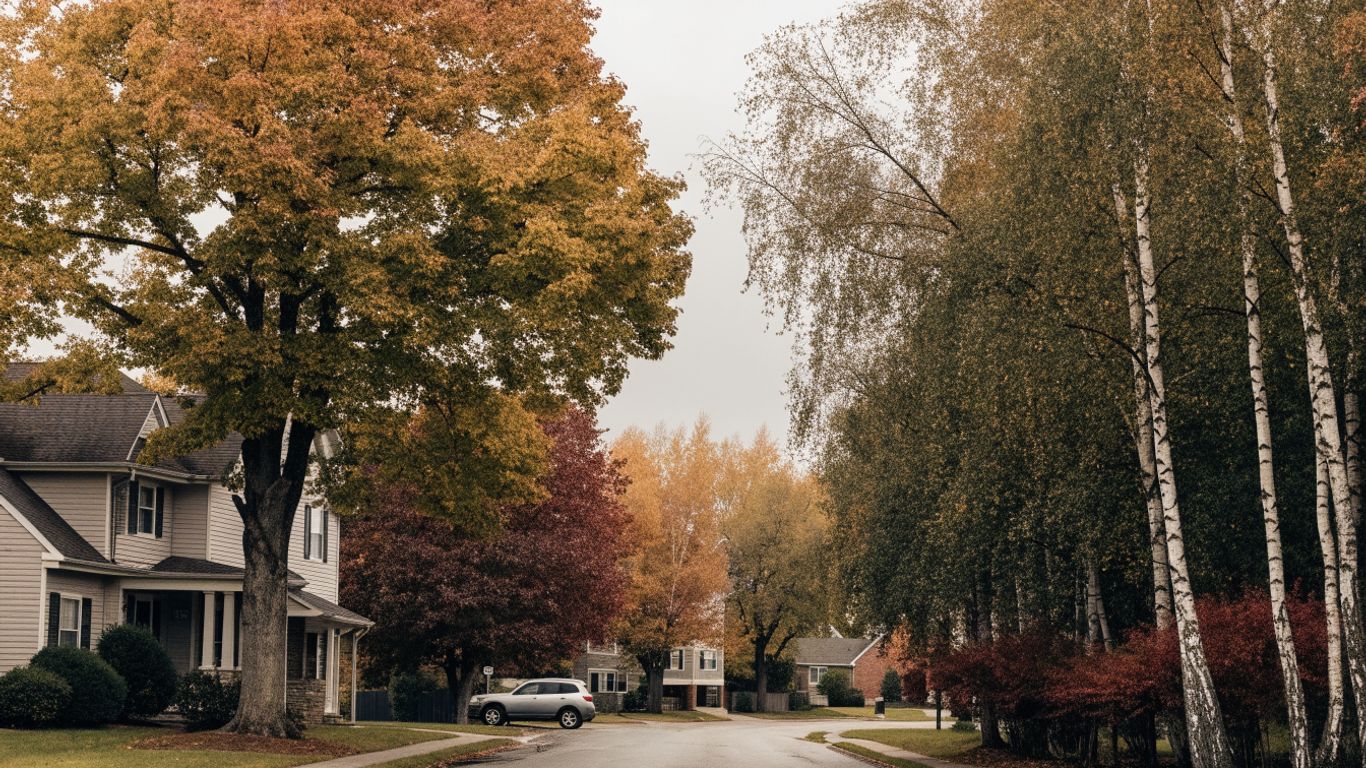
Maples, birches, oaks, ashes and beeches are familiar deciduous trees across the region. They shed their broad leaves as the growing season ends, though the exact timing depends on the species, the weather and the tree’s condition. Oaks and beeches often hold their dry brown leaves well into winter, a habit called marcescence, so a leafy oak in January is not a problem.
| Tree | Typical leaf pattern | What you may notice |
|---|---|---|
| Maples | Broad leaves drop in fall | Colour shifts first, often to red or orange |
| Birches | Broad leaves drop in fall | Leaves usually turn yellow before dropping |
| Oaks and beeches | Dry leaves may cling into winter | Brown leaves stay on the branches until spring |
| Tamarack | A native conifer that sheds all its needles | Needles turn gold in fall, and the tree looks bare in winter |
| Pines and cedars | Evergreen, with older foliage shed gradually | Inner needles or scales brown in fall |
Use the table as a baseline. If a deciduous tree loses its leaves much earlier than nearby trees of the same kind, or only one part of its canopy changes, look for other signs before deciding on a cause.
Why Evergreens Like Cedars and Pines Drop Needles Too
Evergreens do not keep every needle forever. White cedar and white pine both shed their oldest, innermost foliage in fall, so the interior of the tree can turn brown and drop over a few weeks while the outer growth stays green. That is normal renewal, not disease.
The pattern to watch for is different: browning at the branch tips, large bare sections, or a sudden change in the newest growth points to stress. If you are adding cedars to your property, our guide on how to plant cedars covers planting depth and the mistakes that cause problems years later.
Common Causes of Leaves Falling Early
Leaves that drop well before autumn are a response to stress. Picture a maple that has dropped half its leaves by August while a similar tree next door stays full. The difference usually comes down to water, pests, or the soil around the roots. The same symptom can have several causes, so look at the tree’s surroundings and the pattern of leaf loss together.
Drought, Heat and Water Stress
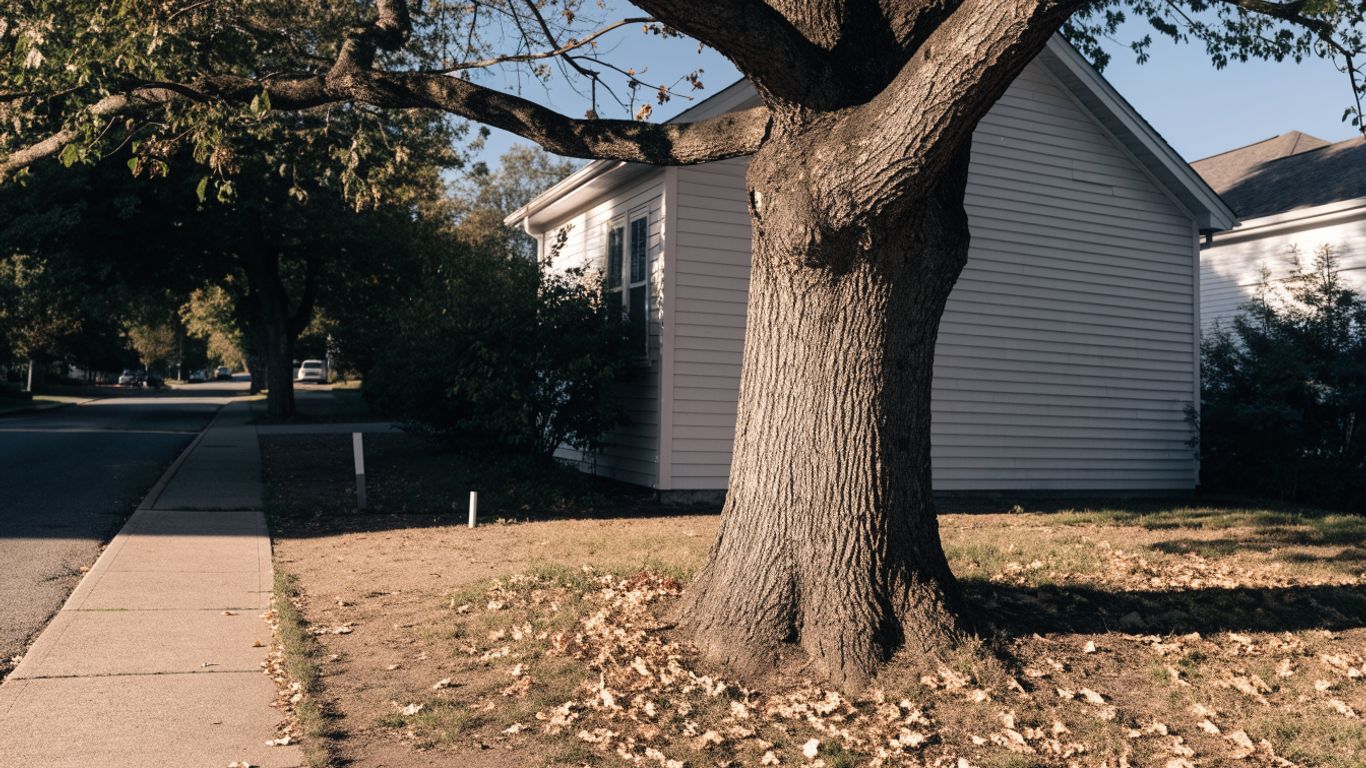
Hot weather and dry soil make it hard for a tree to draw up enough water. To cut water loss, it may shed leaves, and the foliage can wilt, curl, turn brown or fall before autumn. Newly planted trees and trees growing in compacted soil or surrounded by paving are the most vulnerable.
Check how long the soil has stayed dry and whether pavement or compacted ground limits the water reaching the roots. A short-lived change after a heat wave often settles when conditions improve, but early drop that repeats or a canopy that thins year after year deserves attention. More water is not always the answer: species, soil and drainage all matter, and soil that stays waterlogged can cause similar leaf loss.
Pests and Diseases
Insects and diseases can damage leaves directly or block a tree’s ability to move water and nutrients. Look for spots, holes, unusual discolouration, webbing, or damage concentrated on certain branches. Note where symptoms start, how fast they spread, and whether nearby trees show them too. In summer, LDD moth caterpillars can strip leaves from oak, maple and birch. A healthy tree usually recovers from one season of defoliation, but repeated years take a toll.
In our area, one of the most serious pests is the emerald ash borer. The Government of Ontario’s emerald ash borer page explains that it has spread across much of southern Ontario and that its larvae girdle ash trees, which causes the foliage to wilt or turn yellow. If an ash on your property is thinning or dropping leaves early, read our guide on how to protect trees from pests. Once an ash is dead it becomes brittle and unsafe, and our crews handle tree removal across Simcoe County.
Root, Soil and Construction Damage
Roots can be hurt by digging, grading, heavy equipment, soil compaction or changes in drainage. Because roots take up water and anchor the tree, damage below ground often shows up months or years later as sparse foliage, early leaf drop or dead branch tips.
When leaf loss begins after work near the tree, such as a new driveway, a utility trench or an addition, note what changed and when. The timing can point to a cause, though it cannot confirm one. Avoid more digging, and do not pile soil or materials around the trunk while you assess the tree.
When Leaf Drop Signals a Problem: When to Call an Arborist
A few leaves falling out of season do not mean a tree is in danger. What is more concerning is a sudden or spreading change, especially alongside dead branches, damaged bark or signs that the tree is unstable. If you are unsure, an in-person tree risk assessment can separate ordinary seasonal variation from a problem that needs attention.
At Northshore Tree Experts, our ISA Certified arborists provide tree care across Barrie and Simcoe County, from health checks to removals. If your tree is dropping leaves out of season, contact us or call (705) 315-0210 for a free, no-obligation on-site assessment.
Warning Signs Your Tree Needs an Inspection
Look at the whole tree, not just the leaves on the ground. A pattern that is new, spreading or paired with other changes matters more than a single symptom. Write down what you see and when it began; that record helps the arborist. These leaf signs are worth acting on, especially when more than one appears together:
- Leaves drop in summer while neighbouring trees of the same species stay full.
- Leaves turn yellow, brown or spotted and fall from only one section of the canopy.
- Leaf drop comes with thinning at the top of the crown or dead twigs at the branch tips.
- New leaves in spring come in small, sparse or missing on part of the tree.
Bark damage, cracks, a sudden lean or disturbed soil at the base are separate warning signs, covered in the guide linked below.
If you notice these changes, avoid pruning large limbs or disturbing the root area before getting advice. For a fuller checklist, read our guide on how to tell if a tree is dying. Dead or damaged limbs are best handled through professional tree trimming and pruning, and timing matters, so see the best time to trim a tree in Barrie.
If safety is a concern, keep people away from the affected area and call our emergency tree service. If a tree has already come down on your home, follow the steps in what to do if a tree falls on your house.
Leaf Drop FAQs
Is It Normal for Leaves to Fall Off a Tree in Summer?
A small amount can be. Trees sometimes shed a few green leaves shortly after leafing out in spring because they grew more than they can support, and heat or drought can bring extra leaf drop in July and August. Sudden, widespread loss, or leaf drop with wilting, dieback or damaged bark, is more concerning. Check the recent weather and the soil around the tree, and book an inspection if the loss continues.
Should I Rake Fallen Leaves or Leave Them on the Lawn?
A light layer of leaves can stay in garden beds, or be chopped with a mower so it breaks down on the lawn and returns nutrients to the soil. Thick, wet layers can smother grass, so rake or mulch those. Keep leaves out of drains and off walkways, and follow your municipality’s yard-waste guidelines for what you collect. If a tree had a leaf disease, such as spotted or blighted leaves, bag the leaves rather than leaving them under the tree.
Do all trees lose their leaves in autumn?
No. Deciduous trees such as maples, birches and oaks drop most of their leaves, while evergreens keep most of their needles and replace the oldest ones gradually. Tamarack is a conifer that behaves like a deciduous tree and drops all its needles.
Can a tree recover after losing its leaves early?
Often, yes, when the cause was temporary, such as one dry summer. A healthy tree can leaf out again the next spring from stored energy. Early drop that repeats, dieback, or a cause such as emerald ash borer or root damage makes recovery less likely, and an arborist should assess the tree.
Why are leaves falling from only one side of my tree?
Uneven sun, wind or water can cause it, but it can also point to damaged roots on that side, a failing branch, or a pest working on one section. Check the affected side for dead twigs, bark damage or disturbed soil, and have it assessed if the loss spreads.
Should I worry if my evergreen drops needles?
Browning of the oldest inner needles in fall is normal for cedar and pine. Browning at the branch tips, bare branches, or damage to the newest growth is a reason to look closer.
Most autumn leaf drop is a normal part of how deciduous trees prepare for winter, but early or uneven loss is a useful signal to look closer. Pay attention to the season, the tree’s usual pattern, and any change to its branches, trunk or surroundings. When several warning signs appear together, an arborist can help you decide what the tree needs. Call Northshore Tree Experts at (705) 315-0210 for a free, no-obligation assessment. Our ISA Certified team serves Barrie, Newmarket, Innisfil, Wasaga Beach, Bradford, Oro-Medonte and Georgina.