Key Takeaways
- Regular visual inspections are the easiest way to catch a declining tree early.
- Changes in foliage colour, density, and bark condition are usually the first clues.
- In Simcoe County, a dead or dying ash tree deserves priority attention — Emerald Ash Borer has left many local ash trees structurally unstable well before they look obviously dead.
- Storm damage can quietly weaken a tree that still looks healthy from a distance, especially after our region’s heavier spring windstorms and wet, heavy snow loads.
- A lean, cracking soil, or falling limbs near a structure calls for a professional risk assessment — see our guide on what to do if a tree falls on your house if it’s already happened.
- Catching problems early is almost always cheaper than an emergency removal later.
How to Tell If a Tree Is Dying
Spotting a dying tree early usually comes down to noticing gradual changes rather than one dramatic event — thinning canopy, discoloured leaves, or bark that no longer looks tightly attached to the trunk. Many homeowners mistake early decline for normal seasonal shedding, which is exactly why the signs get missed until a tree is already a safety concern.
Northshore Tree Experts has been assessing tree health across Barrie, Newmarket, Innisfil, Wasaga Beach, Bradford, Oro-Medonte, and Georgina since Johnny founded the company in , and that hands-on experience with hundreds of properties has shaped a simple philosophy: honest evaluation first, work second — including telling a homeowner when a tree doesn’t need anything done at all. With ISA Certified Arborists on staff, including Supervisor and Lead Climber Martin Overgaauw, the team is trained to catch the subtle indicators an untrained eye tends to miss, which is often the difference between a tree that can be saved and one that becomes a liability.
Common Signs That a Tree May Be Dying
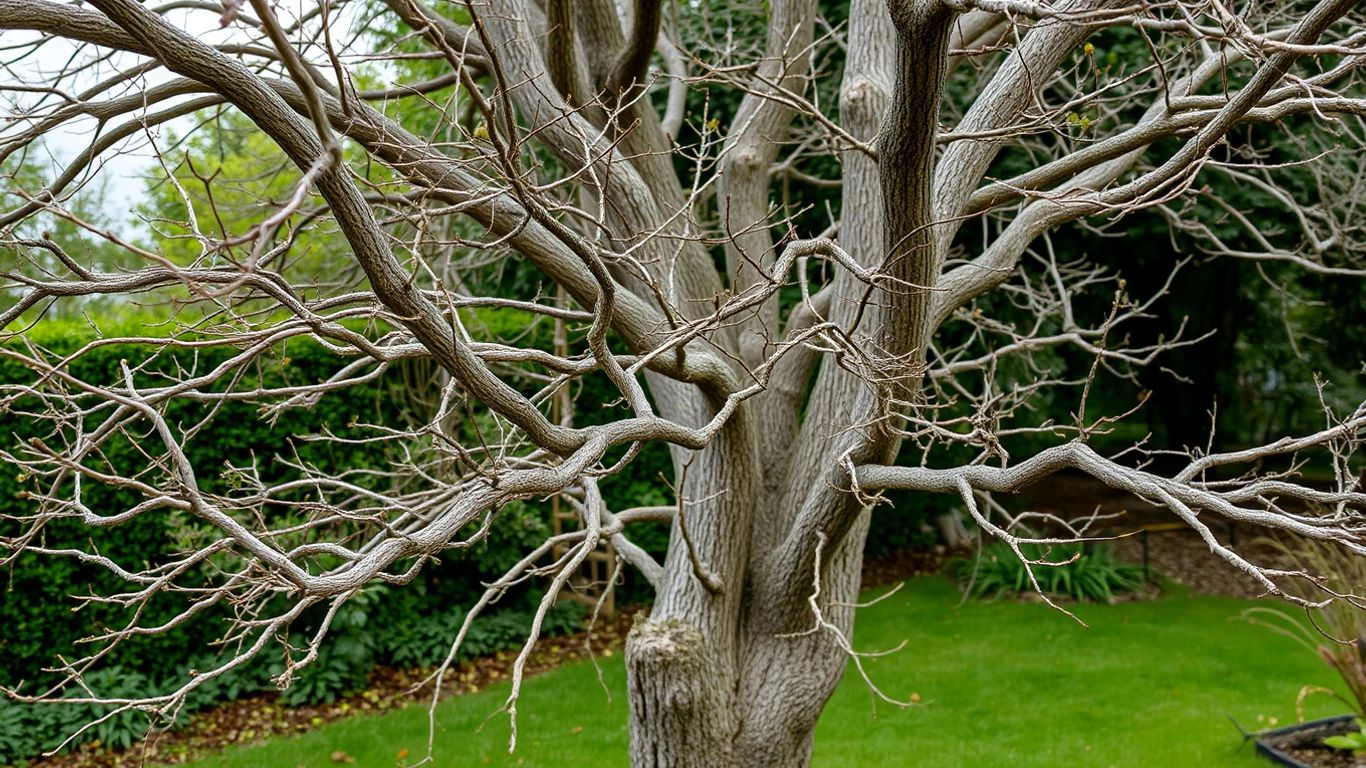
During routine yard maintenance, a visual check is the most practical way to monitor tree health. Occasional leaf or branch loss is normal, but a widespread decline across the canopy is a signal that something deeper is going on and that a professional opinion is worth getting.
A few patterns tend to show up consistently in trees that are struggling:
- Dieback starting in the upper canopy and working downward.
- Bark that peels or flakes away, revealing dry, brittle wood underneath.
- Vertical cracks or fissures running along the main trunk.
- Mushrooms or fungal growth appearing at the base.
- Sparse or missing leaf growth during the spring season.
- For ash trees specifically: thinning canopy combined with D-shaped exit holes or bark splitting — the signature pattern of Emerald Ash Borer, which we cover in more depth in our guide to protecting trees from pests.
Once any of these show up, it’s worth tracking how they progress over the following weeks. Acting on early warning signs gives a tree the best chance at recovery, while waiting until multiple symptoms appear together often means the decline has already gone too far to reverse.
What Causes Trees to Die?
Most tree deaths trace back to some mix of environmental stress, disease, or physical damage. Even species well-suited to our climate can decline sharply when conditions shift outside their normal tolerance range — and Simcoe County’s freeze-thaw winters, road salt exposure, and drought-prone summer stretches put real pressure on root systems year over year.
| Stressor Factor | Impact on Tree Health | Severity Level |
| Chronic Drought | Reduces nutrient transport | Moderate to High |
| Root Compaction | Suffocates root systems | High |
| Fungal Infection | Decays structural wood | Critical |
| Emerald Ash Borer (ash trees only) | Cuts off nutrient flow beneath the bark | Critical |
These pressures don’t just weaken a tree cosmetically — they also lower its resistance to pests like bark beetles or Emerald Ash Borer, accelerating decline once an infestation takes hold. A tree that’s lost much of its root system to soil compaction, for instance, is far more likely to fail in a moderate windstorm than a healthy tree of the same size — which is exactly the scenario behind most of the emergency calls we get after a storm (more on that in what to do if a tree falls on your house). Some of these causes can be avoided with better care, while others stem from decisions made years earlier, like poor placement or old construction damage. Either way, the resulting stress eventually shows up in the canopy or trunk, and that’s the cue to bring in a professional.
Trees That Pose the Highest Safety Risks in Simcoe County
Certain species fail more readily than others, particularly those with brittle wood or weak branch unions that can’t handle our local storm patterns as well as trees with denser, more fibrous growth. A few worth knowing specifically:
- Silver Maple and Manitoba Maple — both common across Barrie and the surrounding area, and both notorious for weak branch unions that fail in wind or heavy wet snow, even on trees that otherwise look healthy.
- Dead or dying ash trees — with Emerald Ash Borer active throughout the region, a dead ash becomes structurally unreliable fast. Wood that’s been dead even a season or two can shed large limbs with little warning, which is why we treat ash removal as higher priority than most other species.
- Any species with a pronounced lean toward a home, driveway, or power line — risk here has less to do with species and everything to do with proximity, since even a partial failure can cause real damage.
When a tree already shows signs of disease or a noticeable lean and sits close to a structure, it deserves priority attention. Northshore Tree Experts handles these higher-risk removals regularly across Barrie, Newmarket, Innisfil, Wasaga Beach, Bradford, Oro-Medonte, and Georgina, using standard risk-assessment methods to determine how much danger a given tree actually poses rather than guessing based on appearance alone.
How to Inspect a Tree Safely
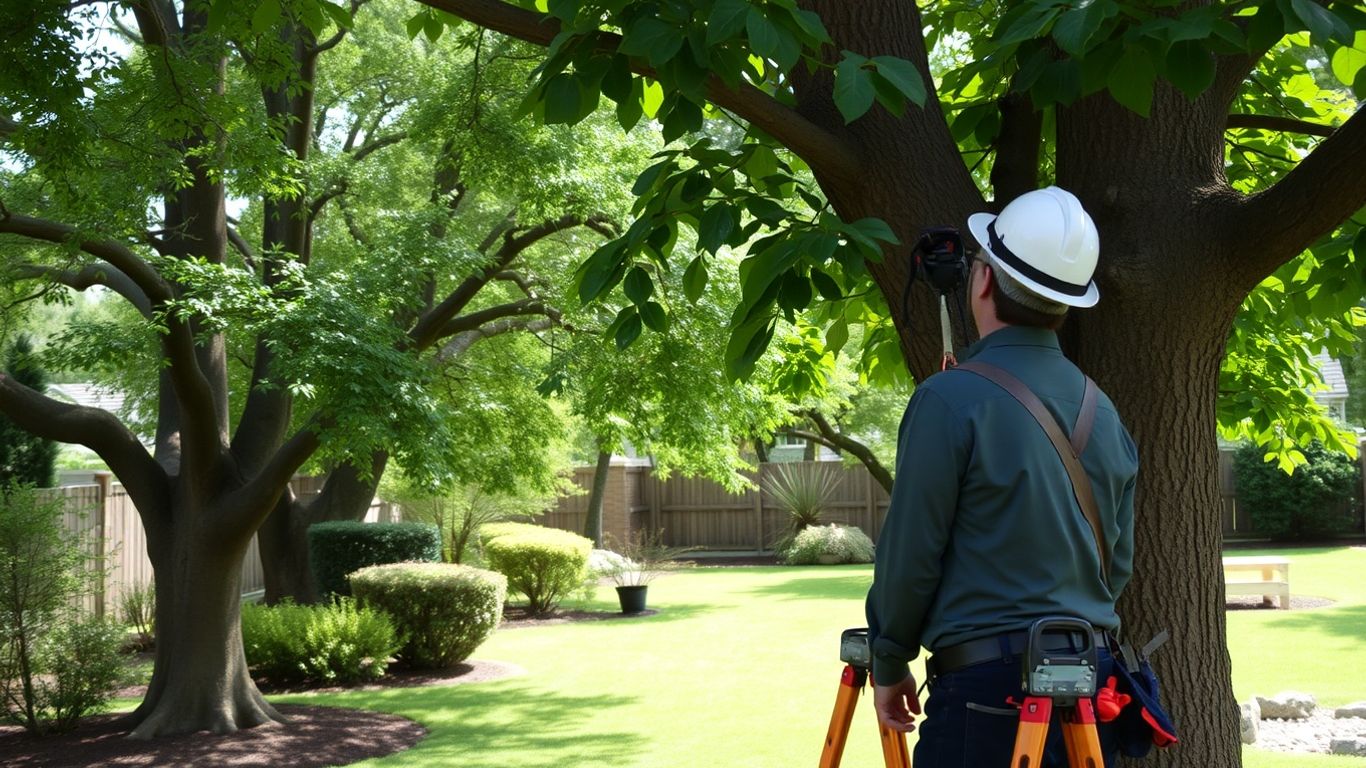
A safe inspection starts at ground level and works upward. Look for soil heaving, exposed or damaged roots near the trunk flare, and any signs of root rot before moving your attention higher up the tree. Keep a reasonable distance throughout, especially around a trunk or canopy that shows visible instability.
More advanced checks — like sounding the trunk with a mallet to listen for hollow spots — can reveal internal decay that isn’t visible from the outside, but this kind of diagnostic work carries real risk if done incorrectly and is best left to a trained professional. Our lead climber Martin, an ISA Certified Arborist, performs these closer structural assessments as part of a full tree risk assessment. Never climb a trunk or approach branches that are swaying in strong wind yourself — a methodical, ground-level review is usually enough to flag when it’s time to call in a certified arborist.
Can a Dying Tree Be Saved?
Whether a declining tree can recover depends largely on how much damage has reached its root and vascular systems. Trees dealing with environmental stress or a minor pest issue often respond well to targeted care — irrigation adjustments, soil amendments, or corrective pruning. Once decay has compromised more than about a third of a tree’s internal structure, though, the odds of a full recovery drop considerably. Ash trees with confirmed, established Emerald Ash Borer damage fall into this category more often than not.
A formal diagnostic assessment is the clearest way to know which category a tree falls into. Northshore Tree Experts approaches this with the same honesty that’s shaped the business since day one — if a tree can be treated with a manageable care plan, that’s what gets recommended, and if surgical removal is genuinely the safer route for the tree and everything around it, that gets said plainly too. Getting an accurate read early protects both your remaining landscape and your budget.
Preventing Trees from Becoming Hazardous
Proactive care means giving a tree what it needs before problems ever start — consistent mulching, appropriate watering, and avoiding accidental trunk damage from mowers or trimmers. A healthy tree has natural defenses that let it compartmentalize minor wounds and shrug off severe weather far better than a stressed one.
An annual inspection catches smaller issues, like crossing branches or thinning growth, before they turn into structural problems — and in this region, an inspection right after any major spring windstorm or heavy snow event is worth adding to that routine too. Choosing species suited to your specific site conditions — soil, light, available space — is ultimately the strongest form of prevention, since a tree that’s well-matched to its environment tends to stay healthy for decades with minimal intervention.
Conclusion
Keeping your trees healthy protects both your property and your peace of mind, and catching decline early is what keeps a manageable issue from turning into an expensive emergency — or worse, a tree that comes down on your home during the next storm. A little regular attention now goes a long way toward keeping your Simcoe County landscape safe and thriving for years to come.
If a tree on your property is already showing warning signs, reach out to our ISA Certified team for an honest assessment.
Frequently Asked Questions
How often should I check if my trees are dying?
A thorough inspection once per season is generally sufficient, with an added check after any major storm.
Is a dead ash tree more dangerous than other dead trees?
Often, yes. With Emerald Ash Borer active throughout Simcoe County, ash trees frequently die faster and become brittle sooner than other species, so we recommend prioritizing ash removal once a tree is confirmed dead or heavily infested.
Is it safe to leave a dead tree in my yard for wildlife?
It can be, as long as the tree is well away from structures, power lines, and areas people frequently walk through.
Do all trees with fungus on them need to be removed?
Not necessarily, but fungal growth like mushrooms near the base often signals interior decay that warrants a professional look.
Why does my tree have peeling bark?
Some species, like birches and maples, shed bark naturally. On other species, sheet-like peeling can point to trunk damage or disease.
Can a tree with a hollow trunk be saved?
Often yes, provided the root system is still healthy — a professional should evaluate how much sound wood remains to safely support the canopy.
How do I know if my tree is leaning dangerously?
A sudden change in lean, or cracking and lifting soil around the base, signals a serious risk and should be evaluated right away.
What should I do if a tree branch falls on my property?
Have the remaining limbs assessed by a professional, since a fallen branch is often a sign that further structural failure could follow. If the damage involves your house directly, see our step-by-step guide for what to do first.
Northshore Tree Experts Inc. proudly serves Barrie, Newmarket, Innisfil, Wasaga Beach, Bradford, Oro-Medonte, and Georgina with ISA Certified arborists on every job.