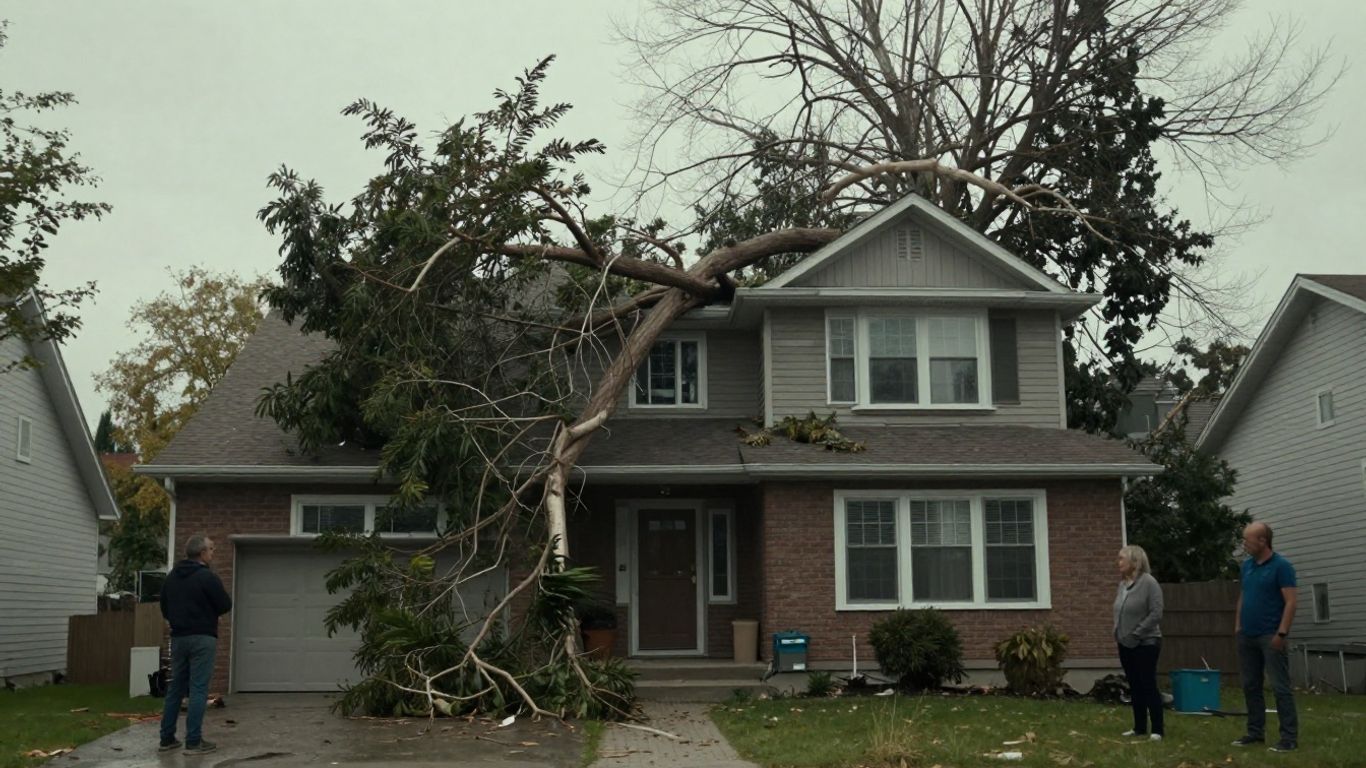
Few things are more unsettling than the sound of a tree coming down on your roof. In that first moment, it’s easy to feel torn between wanting to assess the damage and not knowing whether it’s even safe to go near it. If a tree fell on your house, the right response in the first few minutes matters more than anything else, more than photos, more than the insurance call, more than the cleanup. Here’s exactly what to do, in order.
When dealing with emergency tree damage after a storm, homeowners can rely on professional Barrie tree removal services and cleanup to safely handle fallen trees, damaged branches, and hazardous situations.
Key Takeaways
- Get people and pets away from the damaged area first; everything else can wait.
- Call 911 if there’s an injury, a gas smell, sparking, smoke, or visible structural instability.
- Stay well clear of downed wires and any part of the house that looks unstable.
- Photograph the damage only from a safe position before starting an insurance claim.
- Have a professional inspection done before deciding whether the home is safe to occupy.
What to Do in the First Few Minutes
When a tree comes down on a house, the instinct is often to assess the damage immediately. Resist that. Start with people, not property.
Get everyone outside if there’s any sign of structural damage, smoke, sparking, water intrusion, or a gas odour. Bring pets with you if it’s safe to do so, but don’t go back inside just to grab belongings. Nothing in the house is worth the risk of a second collapse or a live wire you can’t see.
if anyone is injured, the structure looks unstable, or utility lines are involved. Stay well away from any downed wires, even ones that look inactive can still be live and dangerous. Emergency responders are trained to assess and secure these hazards; you aren’t, and that’s not a criticism, it’s just not something anyone should have to guess at during a crisis.
Don’t touch the tree. Don’t cut the trunk, climb onto the roof, or try to pull branches off the house yourself. A tree that’s fallen partway or is resting under tension can shift suddenly, and removing one part can destabilize another. This is exactly the kind of situation an emergency tree service is trained to handle safely, with the right equipment and rigging to bring a tree down in a controlled way instead of guessing.
Documenting the Damage Safely
Once the immediate danger has been addressed and it’s genuinely safe to do so, documentation becomes the next priority. This record will matter later, for your insurance claim, for any conversation about repairs, and for establishing exactly what happened.
Take wide shots and close-up photos of:
- The roof, walls, and windows
- Interior damage, including any water intrusion
- Nearby utility equipment
- The tree’s position relative to the house
Photograph only from a safe position. Never stand beneath a damaged or unstable area to get a better shot. Note the time, the weather conditions at the time of the fall, and who was present. A short, factual written record, made while details are fresh, is often more useful later than memory alone.
Hold onto every receipt from this point forward: temporary accommodation, urgent repairs, tarping, and any professional assessment. Before agreeing to major repair work, ask what’s actually necessary to make the site safe right now versus what can wait for a full repair plan, a rushed decision based on a quick visual estimate can cost more than it saves.
Does Homeowners Insurance Cover a Tree Falling on Your House?
This depends entirely on your specific policy, so it’s worth reading the wording carefully rather than assuming coverage either way. Whether a claim is paid typically comes down to the cause of the fall, and your policy’s exclusions, deductible, and coverage limits.
When you contact your insurer, ask directly:
- What evidence does the adjuster need?
- Is emergency mitigation (like a temporary roof covering) authorized, and will it be reimbursed?
- How is debris removal handled under the policy?
Keep damaged materials in place where it’s safe to do so, rather than clearing everything away before the adjuster has had a chance to inspect. A tree falling on a house often affects more than just the roof, water intrusion, framing, insulation, electrical systems, fences, and detached structures can all need separate documentation. Avoid permanent repairs until the insurer has had a reasonable opportunity to assess the damage, but do take sensible steps to prevent things from getting worse, like arranging a temporary covering through a qualified professional.
A simple way to keep the claim organized:
| Damage or Cost | What to Record | Who Needs It |
|---|---|---|
| Roof and structure | Photos, visible openings, inspection notes | Insurer and structural professional |
| Tree and debris | Location, size, access issues, removal estimate | Insurer and tree service |
| Belongings | Item, condition, approximate age, photos | Insurer |
| Temporary living | Dates, receipts, reason for leaving | Insurer |
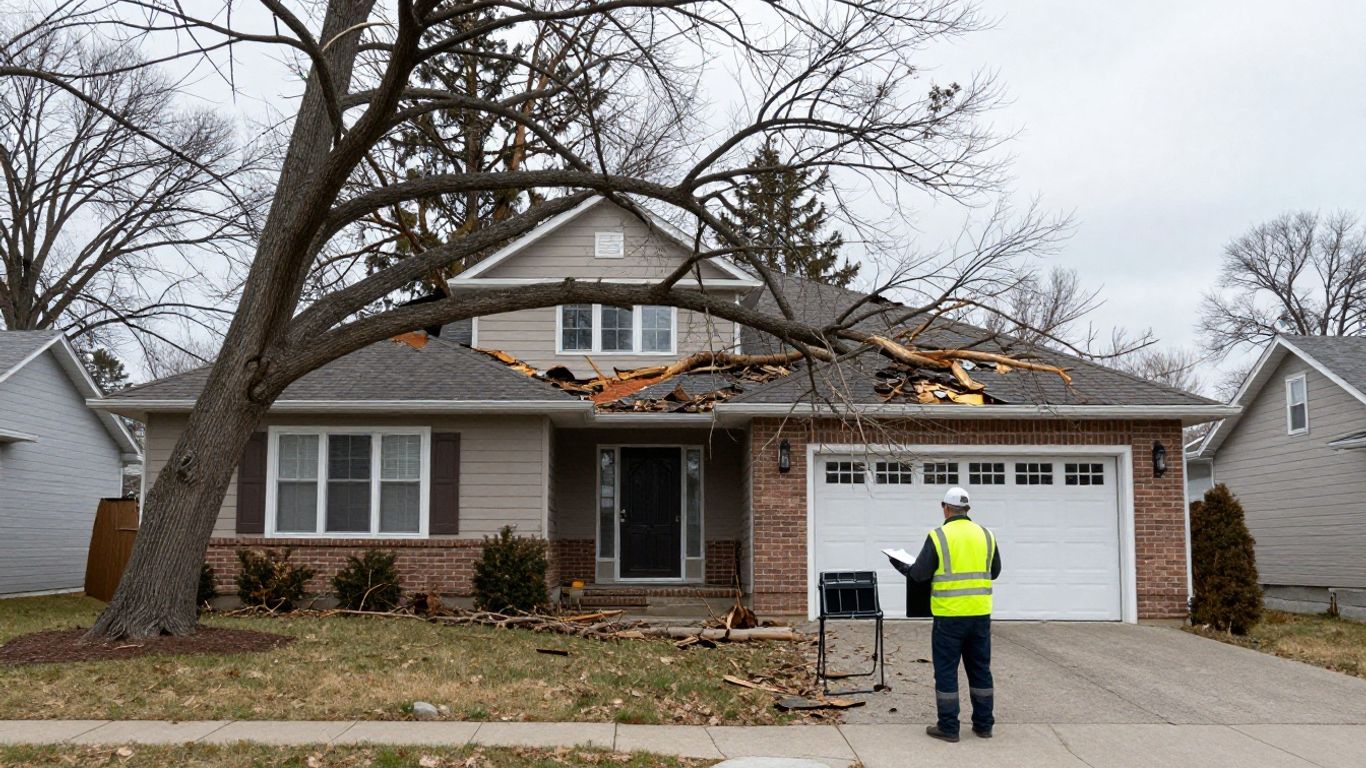
Who Pays If a Neighbour’s Tree Falls on Your House?
Responsibility isn’t decided by ownership alone. What matters more is the cause of the fall and whether anyone knew about a hazard beforehand and ignored it. In most cases, you’ll start by contacting your own insurer, and the insurance companies work out responsibility between themselves afterward.
If you believe the tree was already showing signs of decay or damage before it fell, preserve any evidence that supports that, photos, prior complaints, arborist notes, or messages about a visible risk. Don’t enter your neighbour’s property without permission to gather this. Keep the conversation with your neighbour calm and factual: a sudden storm doesn’t automatically mean nobody’s at fault, and a neglected hazard doesn’t automatically settle every claim either. These situations often take time to sort out properly, and rushing the blame conversation rarely helps.
Can You Stay in the House After a Tree Falls?
A home can look mostly fine from the outside and still be unsafe to occupy. Roof framing, load-bearing walls, wiring, plumbing, and hidden water damage aren’t always visible from the street, or even from inside a room that looks untouched.
Leave immediately, or don’t go back in, if you notice:
- Sagging ceilings or shifting walls
- Major visible cracks
- Exposed wiring
- A gas odour
- Active water leaks
- Any debris that looks like it could fall
Don’t sleep in or use rooms directly beneath the impact area, and avoid rooms where water is entering near electrical fixtures. Whether you can safely return depends entirely on a professional assessment, not a quick walk-through. Your insurer may cover temporary accommodation under your policy, but a conversation about coverage isn’t the same as a structural clearance to move back in.
Common Mistakes People Make After a Tree Falls
- Treating it like routine yard cleanup. Unstable branches, a shifted trunk, and hidden wiring can hurt someone well after the initial impact, even a small-looking limb can be under tension.
- Rushing into permanent repairs before the damage is documented and the insurer has had a chance to inspect.
- Walking beneath a suspended or partially supported branch.
- Operating a chainsaw without the training or equipment the situation actually requires.
- Getting near a fence, puddle, or object close to a downed line.
- Throwing away damaged property before it’s been photographed and listed.
- Assuming a quick look means the house is safe to move back into.
If conditions change at any point, new cracking, rising water, smoke, or movement, leave again and call emergency services rather than trying to manage it yourself.
How to Reduce the Risk Before It Happens
Prevention starts long before a storm. Walk your property periodically and look for dead limbs, cracks, leaning trunks, root disturbance, fungal growth, or branches rubbing against the house or utility lines. Pay closer attention after major excavation, construction, flooding, or severe weather nearby, all of which can compromise root systems in ways that aren’t obvious from the surface.
A professional tree risk assessment can tell you whether what you’re seeing is a manageable maintenance issue or a real hazard. Regular pruning should always have a clear purpose; indiscriminate cutting can actually weaken a tree rather than protect it. When planting new trees, think ahead to mature size, root space, and distance from the house, decisions made at planting time often prevent problems decades later.
Why Homeowners Trust Northshore Tree Experts
Northshore Tree Experts started in 2018 because Johnny wanted to build something better than what he’d seen elsewhere in the industry, a business built on honest work and genuine care, not upselling. That means giving clients a straight answer even when it means recommending against a service, and it’s part of why the company has built its reputation on trust rather than being the cheapest quote in town.
As an ISA Certified Arborist, Johnny personally leads every job, from the first phone call through the final cleanup, so nothing gets lost between an estimate and the work actually being done. Northshore Tree Experts offers emergency tree service alongside tree risk assessment, tree removal, and tree care, and serves homeowners throughout Barrie, Newmarket, Innisfil, Wasaga Beach, Bradford, Oro-Medonte, and Georgina.
If a tree has come down on your home, having a certified arborist assess the situation, rather than guessing at what’s safe to touch, is one of the most important steps you can take before cleanup or repairs begin.
Conclusion
When a tree hits your home, the order of operations matters: safety first, then careful documentation, then a prompt call to your insurer, then a professional structural and tree assessment. Resist the urge to rush into cleanup or repairs before those steps are done. Steady, careful decisions in the first few hours make the entire recovery process easier to manage.
Frequently Asked Questions
What should I do first when a tree falls on my house?
Move everyone away from the affected area, leave if the structure or utilities seem unsafe, and call 911 for injuries, fire, gas concerns, or signs of structural collapse. Don’t approach the tree or damaged roof until the hazards have been assessed.
Should I call the fire department after a tree hits my home?
Yes, if there’s an injury, a suspected gas leak, fire, a downed power line, or possible structural collapse. For less urgent situations, contact your insurer and arrange professional assistance without entering unsafe areas yourself.
Will homeowners insurance pay for a fallen tree?
It depends on the cause of the fall and the specific terms, exclusions, deductible, and limits in your policy. Ask your insurer directly about both property repairs and debris removal rather than assuming either is automatically included.
Who removes a tree that falls from a neighbour’s property?
It depends on where the tree landed, what it damaged, and whether there’s evidence of negligence. Contact your own insurer first, document the scene thoroughly, and get written guidance before authorizing any significant work.
Can I stay in my home after a tree falls on it?
Only once a qualified professional or relevant authority has confirmed the building is safe and there are no unresolved hazards. Visible damage doesn’t always reveal problems with framing, wiring, plumbing, or the roof structure underneath.
What should I photograph for an insurance claim?
From a safe position, photograph the tree, roof, walls, windows, interior damage, any detached structures, nearby utilities, and damaged belongings. Keep a written timeline and save every receipt for emergency measures and temporary accommodation.
How can I reduce the risk of a tree falling on my house?
Arrange periodic inspections, address dead or compromised limbs promptly, watch for changes after storms or nearby construction, and plant new trees with mature size and clearance in mind from the start.